
Introduction: The Silent Revolution Reshaping Our Digital World
In the bustling landscape of technology, a profound and silent revolution is underway, one that is fundamentally altering how we work, create, and interact with machines. At the epicenter of this transformation is Microsoft, a company that has executed one of the most remarkable strategic pivots in modern business history. Under the leadership of CEO Satya Nadella, Microsoft has evolved from a legacy software giant into an intelligent cloud and AI-first behemoth. This is not a story of a single, flashy product launch; it is the narrative of a deeply integrated, ubiquitous intelligence being woven into the very fabric of our most essential digital tools. From the code written by developers and the documents crafted by office workers to the vast analytical power of the cloud, Microsoft’s AI is revolutionizing everything. This in-depth exploration delves into the architecture of this AI revolution, examining its core components, its real-world applications, and the profound implications it holds for the future of productivity, creativity, and global business.
A. The Strategic Masterstroke: The Partnership with OpenAI
The cornerstone of Microsoft’s AI dominance is its multi-billion-dollar partnership with OpenAI, the research lab behind groundbreaking models like GPT-4, DALL-E, and ChatGPT. This was not merely an investment; it was a strategic symbiosis that accelerated Microsoft’s AI capabilities by years, if not decades.
A. A Symbiotic Alliance: OpenAI brought to the table the most advanced large language models (LLMs) and generative AI technology in the world. Microsoft, in turn, provided the one thing needed to scale this technology globally: immense computational power through its Azure cloud infrastructure. This partnership allowed Microsoft to effectively bypass years of internal R&D and immediately integrate state-of-the-art AI into its entire product suite.
B. Azure OpenAI Service: The Enterprise Gateway: Microsoft quickly productified this partnership through the Azure OpenAI Service. This is a critical platform that gives businesses secure, managed, and compliant access to OpenAI’s powerful models, including GPT-4, within the trusted and secure environment of the Azure cloud. This move effectively made Microsoft the primary gateway for enterprises seeking to leverage advanced AI without the associated risks and complexities of building and maintaining their own infrastructure.
C. Beyond ChatGPT: A Full-Stack AI Platform: While the public’s attention was captured by ChatGPT, Microsoft was building a comprehensive AI stack. This stack ranges from the infrastructure layer (Azure AI supercomputing) and the model layer (Azure OpenAI) to the application layer (Copilots), creating a vertically integrated ecosystem that is incredibly difficult for competitors to challenge.
B. The Copilot Ecosystem: Your Universal AI Companion
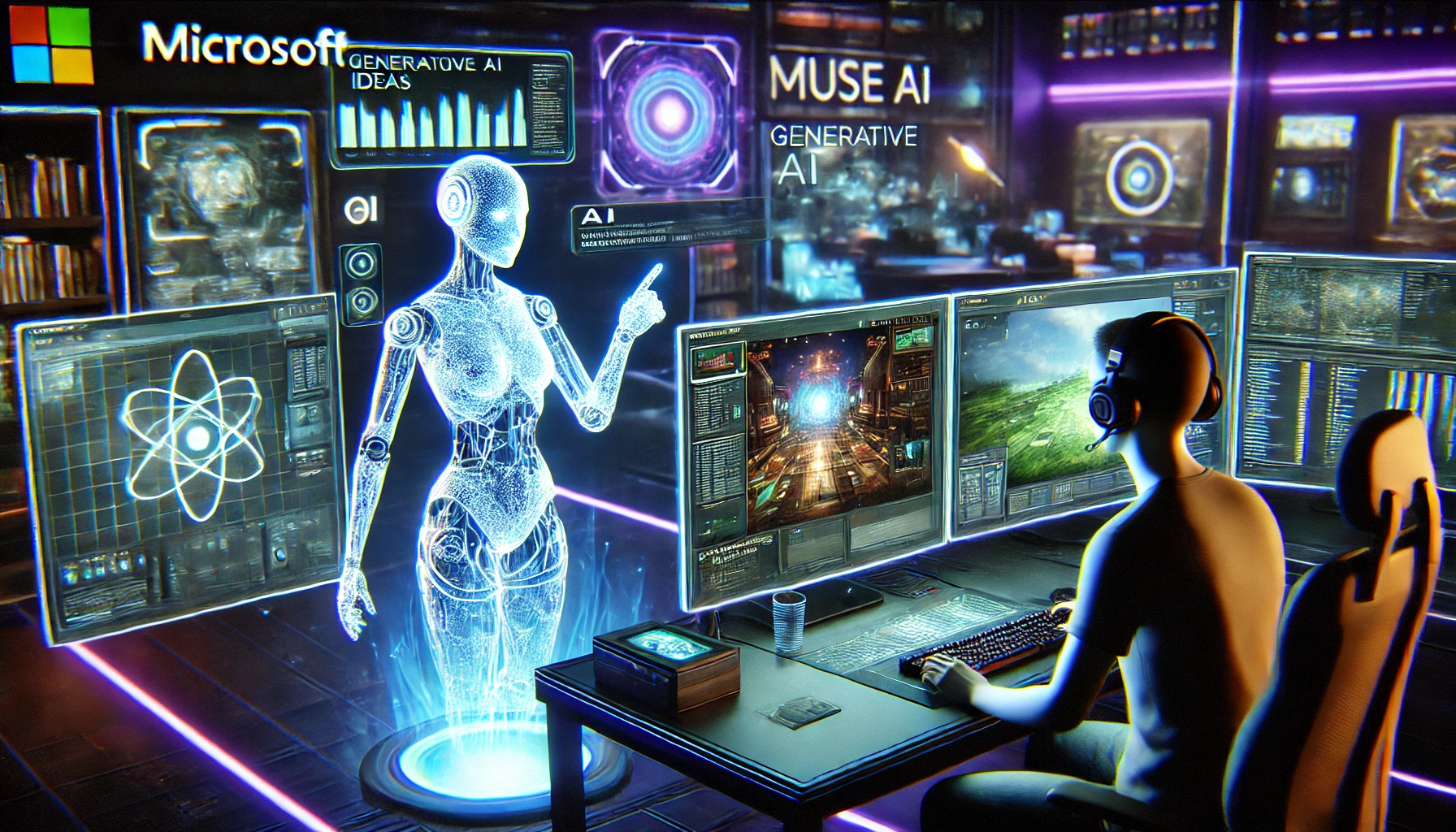
The most visible manifestation of Microsoft’s AI revolution is the “Copilot” brand—an intelligent assistant designed to work alongside users across every major Microsoft application. This is not a single tool but a pervasive layer of intelligence.
A. GitHub Copilot: The First-Mover Revolutionizing Code
Launched prior to the OpenAI partnership hype, GitHub Copilot was the first glimpse into Microsoft’s AI-first future. It functions as a pair programmer that suggests entire lines of code and functions in real-time.
* Impact: It has dramatically increased developer productivity, automating boilerplate code, suggesting bug fixes, and helping developers learn new languages and frameworks. By turning natural language prompts into code, it is lowering the barrier to entry for programming and fundamentally changing the nature of software development.
B. Microsoft 365 Copilot: Reinventing Knowledge Work
This is the flagship Copilot that integrates directly into the tools used by hundreds of millions of people daily: Word, Excel, PowerPoint, Outlook, and Teams.
* In Word: It can draft entire documents based on a simple prompt, rewrite sections for clarity or tone, and summarize lengthy reports in seconds.
* In Excel: It can analyze complex datasets, identify trends, and create sophisticated formulas and charts through natural language commands, democratizing data analysis beyond expert users.
* In PowerPoint: It can transform a Word document into a beautifully designed presentation or generate entire slide decks from scratch, complete with speaker notes and relevant imagery.
* In Outlook: It can intelligently manage your inbox, drafting emails, summarizing long threads, and helping you prioritize your communications.
* The “Business Chat” Experience: This is a revolutionary feature that works across all your data—emails, documents, meetings, and contacts. You can ask questions like “What were the key takeaways from my last meeting with Project X team?” and it will synthesize the information from across all connected apps to provide a concise answer.
C. Windows Copilot: The OS as an Intelligent Partner
With the integration of Copilot directly into the Windows 11 operating system, Microsoft is placing an AI assistant at the core of the PC experience. Accessible via a single keystroke, it can control system settings (e.g., “turn on dark mode”), summarize content on any screen, or help you create content across any application, making the entire operating system context-aware and conversational.

C. The Engine Room: Azure AI and Cloud Supremacy
While the Copilots represent the user-facing side of the revolution, the true engine room is the Azure cloud platform. Microsoft’s strategy is to win the enterprise AI race by providing the most comprehensive and trusted cloud AI services.
A. AI-Optimized Infrastructure: Microsoft is building a global network of data centers equipped with advanced NVIDIA GPUs and its own custom AI silicon, like the Maia chip, to create supercomputers dedicated to training and running massive AI models. This infrastructure is the bedrock that powers everything from Azure OpenAI to the Copilot services.
B. Azure AI Services: Pre-Built AI for Every Task: Beyond just providing access to raw models, Azure offers a vast portfolio of pre-built, API-driven cognitive services. These allow developers with no machine learning expertise to easily add capabilities like:
* Computer Vision: For image and video analysis.
* Azure Speech Services: For real-time speech-to-text and text-to-speech.
* Azure Translator: For real-time language translation.
* Azure Form Recognizer: For intelligently extracting text and data from documents.
C. Fabric: The Unified Data Analytics Platform: Microsoft has introduced Fabric, an all-in-one analytics platform that brings together data engineering, data science, and business intelligence under a single, AI-powered umbrella. Its core feature, Copilot in Fabric, allows analysts to generate code, create dataflows, and build machine learning models using natural language, breaking down the technical barriers to advanced analytics.
D. Real-World Impact: Transforming Industries
The theoretical potential of Microsoft’s AI is already being realized in practical, transformative ways across various sectors.
A. Healthcare: Clinicians are using tools like Nuance DAX Copilot (a Microsoft company) to automatically generate clinical notes from patient conversations, reducing administrative burden and allowing more time for patient care. Researchers are using Azure AI to accelerate drug discovery and medical image analysis.
B. Manufacturing and Retail: Companies are leveraging Azure AI to optimize complex supply chains, predict maintenance needs for machinery to prevent downtime, and create hyper-personalized customer experiences through data analysis.
C. Education: Teachers are using Microsoft 365 Copilot to create lesson plans and interactive learning materials, while students can use it as a research assistant to summarize complex topics and spark creative ideas, all within a responsible AI framework designed to encourage learning, not cheating.
E. Navigating the Challenges: The Ethical and Practical Considerations
Such a powerful and pervasive technological shift does not come without its significant challenges and responsibilities.
A. The Hallucination Problem: LLMs can sometimes generate plausible but incorrect or fabricated information. For business use, this presents a major risk. Microsoft’s response is a concept called Grounding, which involves connecting the AI model to trusted, external data sources (like a company’s internal databases) to ensure its responses are factual and relevant, reducing the risk of hallucinations.
B. Data Privacy and Security: With Copilots having access to an organization’s most sensitive data—emails, strategic documents, financial spreadsheets—the security of this data is paramount. Microsoft has built its Copilot stack with a “Zero Trust” architecture, ensuring that prompts and data are not used to train the foundational models and that access is strictly controlled and audited.
C. The Future of Work and Job Displacement: The fear that AI will render many jobs obsolete is real. Microsoft’s framing of the Copilot as a “companion” rather than a replacement is key. The likely outcome is not mass unemployment, but a significant shift in job roles. The value will shift from performing routine tasks to strategic oversight, creative prompting, and editing AI-generated content. This necessitates a massive reskilling and upskilling initiative across the global workforce.
D. The Cost of Adoption: The advanced capabilities of Microsoft’s AI suite, particularly Microsoft 365 Copilot, come at a significant premium. This could create a digital divide, where only large, well-funded enterprises can afford to leverage these productivity gains, potentially leaving small and medium-sized businesses at a competitive disadvantage.
Conclusion: A New Paradigm for Human-Computer Interaction
Microsoft’s AI revolution is more than a product line; it is a fundamental recalibration of the relationship between humans and technology. We are moving from a paradigm of commanding software through clicks and menus to one of collaborating with an intelligent agent through conversation. This shift promises to democratize expertise, amplify human creativity, and unlock new levels of productivity that were previously unimaginable.
The integration of AI into the tools used by billions—Windows, Office, and Azure—represents a distribution advantage that is nearly unassailable. While competitors create point solutions, Microsoft is weaving intelligence into the very canvas of digital work and life. The road ahead is paved with ethical dilemmas and societal adjustments, but the direction is clear. Under Satya Nadella’s leadership, Microsoft has not just adopted AI; it has bet its entire future on it, and in doing so, is actively shaping a future where AI doesn’t replace us, but empowers us to achieve more. The revolution is here, and it is being powered by Microsoft.