
Introduction: The Unavoidable Conversation About Your Career
A silent revolution is unfolding in offices, factories, and home offices around the globe, and its implications for every working professional are profound. The rapid advancement of Artificial Intelligence, particularly generative AI like ChatGPT and its successors, is no longer a distant sci-fi concept; it is a present-day force actively reshaping the labor market. The central question for millions is no longer if AI will affect their job, but how and when. This is not a simple narrative of machines replacing humans. The reality is far more nuanced, involving displacement, transformation, and creation. This comprehensive guide delves deep into the complex relationship between your job and AI, providing a clear-eyed assessment of the risks, a strategic roadmap for adaptation, and an exploration of the new opportunities emerging in this brave new world of work.
A. The Anatomy of Automation: Which Tasks Are Most Vulnerable?
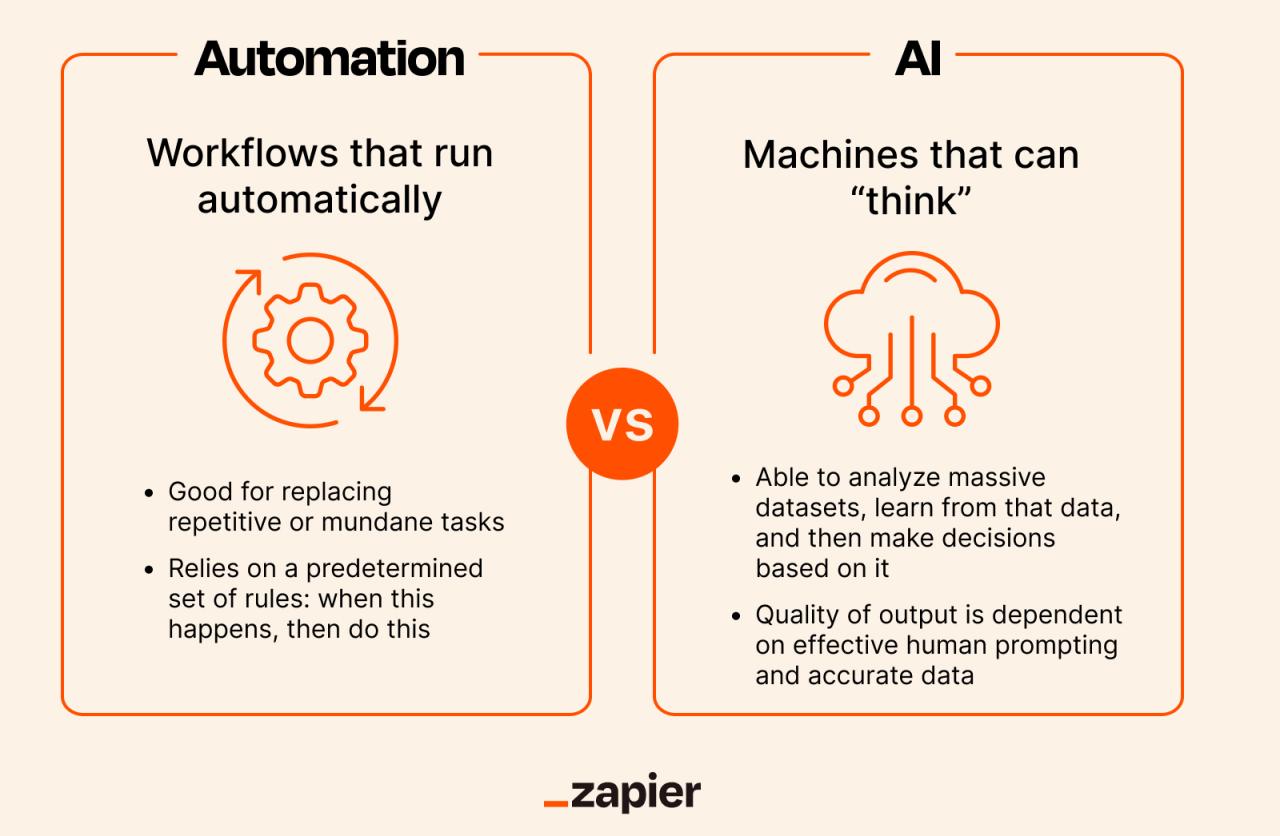
To understand your personal risk, you must first understand what AI is fundamentally good at automating. The threat is not to entire jobs all at once, but to specific, repetitive tasks within those jobs.
A. Information Synthesis and Processing Roles
AI excels at consuming, organizing, and summarizing vast amounts of data at speeds impossible for a human.
* Threatened Tasks: Data entry, basic report generation, literature reviews, summarizing meeting transcripts, and sorting through large datasets for patterns.
* Example Jobs at High Exposure: Paralegals (document review), market research analysts (data crunching), entry-level financial analysts (financial reporting).
B. Routine Cognitive and Creative Tasks
With the advent of generative AI, even creative and language-based tasks are no longer safe.
* Threatened Tasks: Writing generic marketing copy, creating standard legal documents, producing basic graphic designs, generating simple computer code, and composing routine emails.
* Example Jobs at High Exposure: Content writers, copywriters, graphic designers (for routine work), junior software developers (for boilerplate code), and social media managers.
C. Customer Interaction and Support Functions
AI-powered chatbots and voice assistants are becoming increasingly sophisticated, capable of handling complex queries.
* Threatened Tasks: Answering frequently asked questions, processing simple transactions, providing basic technical support, and routing customer calls.
* Example Jobs at High Exposure: Customer service representatives, technical support specialists, and telemarketers.
B. The Human Advantage: Skills That AI Cannot Replicate
While AI is powerful, it lacks the essential human qualities that drive innovation, trust, and complex social interaction. Your long-term career security lies in doubling down on these inherently human skills.
A. Strategic Critical Thinking and Complex Problem-Solving
AI can analyze data, but it cannot define the problem in the first place. Humans excel at:
* Connecting Disparate Dots: Seeing the link between a shift in consumer sentiment and a potential new market opportunity.
* Navigating Ambiguity: Making decisions with incomplete information where there is no clear “right” answer.
* Long-Term Strategic Planning: Envisioning a future state for a company and building a multi-year plan to get there.
B. Emotional Intelligence (EQ) and Empathy
Machines cannot genuinely care. This makes human-centric roles more secure.
* Key Abilities: Building deep trust with clients, managing team dynamics, motivating employees, providing compassionate care, and understanding unspoken human needs.
* Secure Professions: Psychologists, therapists, senior executives, nurses, teachers, and skilled sales professionals who build relationships.
C. Creativity and Original Ideation
While AI can remix existing ideas, it struggles with true, ground-zero creativity born from human experience.
* Key Abilities: Conceptualizing a novel business model, crafting a unique artistic vision, designing a groundbreaking scientific experiment, or writing a story with deep emotional resonance.
* Secure Professions: Research scientists, entrepreneurs, strategic architects, authors, and artists.
D. Ethical Reasoning and Moral Judgment
AI has no inherent sense of ethics. It can be biased and operates on the data and rules it’s given.
* Key Abilities: Making a fair decision in a gray-area HR case, weighing the environmental impact of a business decision, or determining the ethical boundaries of using AI itself.
* Secure Professions: Judges, ethicists, HR directors, and top-level corporate governance officers.
C. The Adaptation Imperative: A Four-Step Survival Strategy
Surviving and thriving in the age of AI requires a proactive and strategic approach to your career.
A. Step 1: Conduct a Personal “AI Vulnerability” Audit
Take a critical look at your current role. List all your daily, weekly, and monthly tasks. Be brutally honest and categorize each one:
* High Risk: Routine, repetitive tasks that an AI could learn to do (e.g., data entry, generating standard reports).
* Medium Risk: Tasks that require some human judgment but could be heavily assisted by AI (e.g., creating a first draft of a presentation, initial code debugging).
* Low Risk: Tasks that rely on the human skills listed above (e.g., mentoring a junior employee, negotiating a complex deal, setting company strategy).
B. Step 2: Become an AI-Human Collaborator, Not a Competitor
The most valuable employees of the future will be those who can use AI as a powerful tool to augment their own abilities.
* Upskill in AI Literacy: You don’t need to be a programmer, but you must understand how to effectively prompt and interact with AI tools. Learn to write precise prompts to generate useful drafts, analyze data, or brainstorm ideas.
* Reposition Your Role: Shift your focus from doing the task to managing the AI that does the task. Your value is in overseeing the output, ensuring its quality, applying strategic context, and making the final creative or ethical judgment.
C. Step 3: Aggressively Develop Your “Human-Centric” Skills
Invest in yourself. Actively seek out training, projects, and mentorships that build your irreplaceable skills.
* Seek Leadership Opportunities: Volunteer to lead a small project or mentor a new hire.
* Practice Public Speaking and Communication: Join a group like Toastmasters to hone your ability to persuade and inspire.
* Study Ethics and Philosophy: Develop a framework for making tough, nuanced decisions.
D. Step 4: Cultivate a Dynamic and Agile Career Mindset
The era of one job for life is over. Embrace lifelong learning and be prepared to pivot.
* Build a “Portfolio Career”: Develop multiple income streams and skill sets. This could involve freelance work, consulting, or having a side business related to your interests.
* Network Strategically: Build relationships with people in fields that are AI-resilient. Your network is your safety net.
* Stay Inherently Curious: Follow industry trends, read widely, and always be asking, “What’s next?”
D. The Emerging Landscape: Jobs of the Future
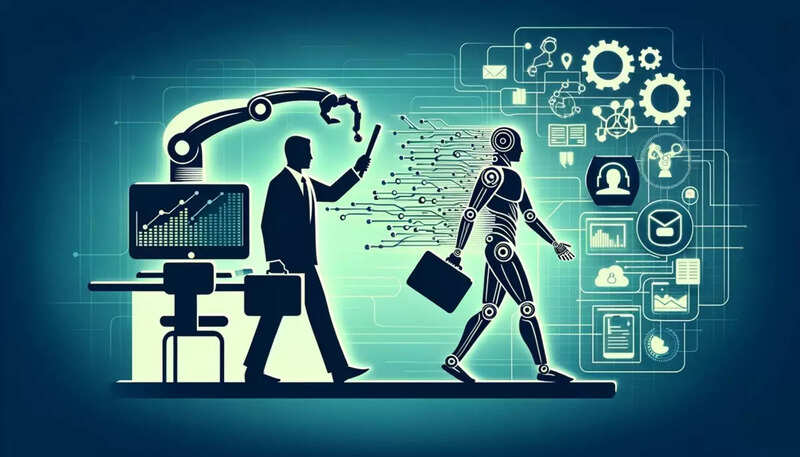
As AI destroys some jobs, it will inevitably create new ones, many of which we can barely imagine today.
A. Direct AI Support Roles
* AI Prompt Engineers: Specialists who craft the perfect instructions to get the best output from generative AI models.
* AI Trainers and Ethicists: Professionals who fine-tune AI models for specific industries and ensure they operate fairly and without bias.
* AI Maintenance and Oversight Specialists: Technicians who monitor, maintain, and repair the complex AI systems running critical infrastructure.
B. Roles Leveraging Human-AI Collaboration
* AI-Assisted Healthcare Diagnosticians: Doctors who use AI to analyze medical images and patient data, but who make the final diagnosis and provide the human touch.
* Human-Robot Team Managers: Supervisors who manage fleets of AI-driven robots in warehouses or factories, handling exceptions and complex logistics.
* Personalized Education Curators: Educators who use AI to design custom learning paths for each student, focusing on mentorship and motivation.
E. Navigating the Transition: Societal and Policy Implications
The AI revolution is not just an individual challenge; it is a societal one that will require new policies and social contracts.
A. The Critical Need for Reskilling and Education Reform
Governments and educational institutions must pivot from teaching static knowledge to fostering adaptive skills like critical thinking, creativity, and collaboration. Continuous, affordable reskilling programs will be essential for mid-career transitions.
B. The Debate Around Universal Basic Income (UBI)
If AI leads to widespread technological unemployment, UBI—a regular, unconditional cash payment to all citizens—has been proposed as a way to provide a financial floor, ensuring economic stability and freeing people to pursue education, caregiving, or creative endeavors.
C. The Future of Work-Life Balance and the 4-Day Work Week
As AI boosts productivity, it could create an opportunity to redefine work, potentially leading to a shorter work week while maintaining or even increasing output, allowing for a better balance between work and life.
Conclusion: Your Career is a Journey, Not a Destination
The confrontation between your job and AI is not a battle to be won or lost, but a dynamic relationship to be managed. The era of passive employment is over. Your career security no longer lies in the title on your business card, but in the unique value you bring to the table—the synthesis of your technical knowledge, your irreplaceably human skills, and your ability to harness AI as a collaborative partner.
The most successful professionals of the next decade will be the agile, the curious, and the empathetic. They will be the ones who see AI not as a threat, but as the most powerful tool ever created to amplify human potential. By conducting an honest audit of your skills, committing to continuous learning, and focusing on what makes you uniquely human, you can not only survive the AI revolution but emerge more valuable, creative, and fulfilled than ever before. The future of work is not a dystopia; it is an opportunity to redefine the very nature of human achievement.