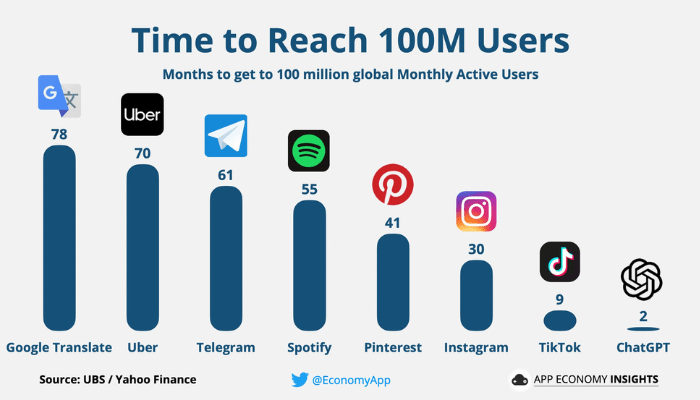
The public release of ChatGPT in late 2022 marked a watershed moment for artificial intelligence, catapulting the power of large language models (LLMs) from academic papers and research labs into the hands of hundreds of millions of users worldwide. It democratized access to AI in an unprecedented way, becoming the fastest-growing consumer application in history. However, the current iteration of ChatGPT, for all its remarkable capabilities, is merely the first glimpse of a much larger technological revolution. It is the prototype, the proof-of-concept that has ignited global conversation. The next evolution of ChatGPT and its underlying models will not be defined by incremental improvements in text generation, but by a fundamental transformation into a more capable, reliable, and seamlessly integrated form of intelligence. This journey will involve a shift from passive text prediction to active reasoning, from isolated modality to unified sensory understanding, and from a standalone tool to an invisible, ambient layer woven into the fabric of our digital lives.
A. Overcoming Current Limitations: The Path to Robustness and Reliability
To understand the future, we must first acknowledge the present constraints. The next evolution of ChatGPT is fundamentally about solving its core weaknesses.
A.1. The Hallucination Problem and the Quest for Truthfulness
“Hallucination”—where the model generates plausible but incorrect or fabricated information—remains the most significant barrier to trust and deployment in high-stakes environments.
-
Advanced Fact-Checking Architectures: Future iterations will integrate real-time, multi-step verification processes. Before presenting an answer, the model will automatically cross-reference its response against curated knowledge bases and live web data (with proper attribution), flagging potential uncertainties and providing confidence scores for its statements.
-
Causal Reasoning Models: Moving beyond pattern matching, researchers are developing techniques to embed causal understanding. This means the model wouldn’t just predict the next word based on statistics; it would understand the underlying cause-and-effect relationships, making its outputs more logical and less prone to factual errors.
-
User-Controlled Confidence Levels: Users may be able to adjust a “confidence dial,” asking the model to be either highly creative (accepting a higher risk of hallucination) or strictly factual and conservative in its responses, limiting itself to well-sourced information.
A.2. The Context Window and Memory Challenge
The “context window” is the amount of text the model can consider at one time. Expanding and intelligently managing this is crucial for complex tasks.
-
Effectively Infinite Context: While current models have context windows in the hundreds of thousands of tokens, the goal is “infinite” context through advanced data compression and hierarchical memory structures. This would allow ChatGPT to read and perfectly recall an entire lengthy document, a full codebase, or the entire history of a long conversation.
-
Persistent, Evolving User Memory: The most personal evolution will be the implementation of persistent memory. With explicit user permission, ChatGPT could learn and remember your preferences, important personal details, your professional expertise, and your past interactions. This would transform it from a generic assistant into a personalized AI counterpart, eliminating the need to repeat context in every new chat session.
-
Selective Memory Management: Users would have full control over this memory—viewing, editing, or deleting specific memories—ensuring privacy and aligning the model’s knowledge with their current needs.
A.3. Computational Efficiency and the Democratization of Power
Running today’s massive models requires immense computational resources, leading to high costs and latency.
-
Model Distillation and Specialization: We will see a proliferation of smaller, highly efficient models distilled from giants like GPT-4. These “lite” models will be capable of running on personal devices (phones, laptops) for common tasks, offering instant response times and enhanced privacy, while calling upon more powerful cloud models for complex reasoning.
-
Algorithmic Breakthroughs: New architectures, such as Mixture-of-Experts (MoE), are already being used to make models more efficient. These systems activate only specific parts of the neural network for a given task, drastically reducing computational cost without sacrificing capability.
-
Cost Reduction and Accessibility: As efficiency improves, the cost of API calls will plummet, making it economically feasible to integrate advanced AI into a vast array of low-cost applications and services, further accelerating its adoption across all sectors.
B. The Multimodal Leap: Beyond Text to a Sensory World
The next evolutionary stage is a full embrace of multimodality, where ChatGPT transitions from a text-based engine to a true multi-sensory AI.
B.1. True Native Multimodality
Instead of relying on separate models for different tasks, future systems will be natively trained on text, images, audio, and video simultaneously.
-
Any-to-Any Conversion: Users will be able to input any combination of media and receive any output. For example, you could input a voice memo describing a chart and receive the actual chart image; or you could show a picture of your broken bicycle and get a video tutorial on how to fix it.
-
Advanced Visual Reasoning and Generation: Beyond simply describing an image, ChatGPT will be able to analyze complex diagrams, detect subtle inconsistencies in a design mockup, or generate a full website front-end from a hand-drawn sketch. The line between language and visual creativity will blur entirely.
-
Integrated Speech and Audio Understanding: Voice interaction will become fluid and natural, supporting real-time conversation, understanding tone and emotion, and filtering out background noise. It could analyze an audio recording of a meeting and provide a summary, transcript, and action items.
B.2. The Agentive Shift: From Assistant to Autonomous Actor
This is the most profound change on the horizon. ChatGPT will evolve from a tool that answers questions to an agent that performs tasks.
-
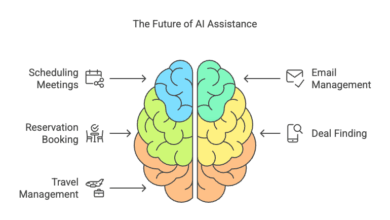
The “Action Model” Paradigm: Future models will be granted the ability to execute actions in the digital world based on high-level user goals. Instead of just telling you how to book a flight, it will, with permission, navigate to the travel website, enter your preferences, and complete the booking for you.
-
Tool and API Integration: These AI agents will be equipped with a “toolbox”—
A. Web browsers for real-time information.
B. Code executors to write and run software.
C. Calendar and email APIs to manage your schedule.
D. E-commerce and banking APIs (with strict security) to handle transactions. -
Multi-Step Planning and Execution: You will be able to give a complex goal like, “Plan and book a 7-day vacation to Japan for my family, optimizing for a mix of culture and relaxation, and present me with three itinerary options.” The AI would break this down into research, booking, and summarization steps, executing them autonomously.
C. Vertical Integration and Specialized Domains
The generic, one-size-fits-all model will give way to a ecosystem of specialized experts fine-tuned for specific fields.
C.1. Domain-Specific Experts
The core model will act as a base, with easily swappable “expert modules” for different professions.
-
ChatGPT for Medicine: A version trained on medical textbooks, clinical research, and (anonymized) patient records could act as a diagnostic aid for doctors, helping to identify rare conditions or suggest treatment plans, all while citing its sources.
-
ChatGPT for Law: It could analyze thousands of legal precedents and case files in seconds, helping lawyers prepare for trials or draft complex contracts, with built-in safeguards to prevent the unauthorized practice of law.
-
ChatGPT for Education: It would evolve into a personalized tutor that adapts to a student’s unique learning style, generates custom practice problems, and provides feedback on essays, all while avoiding simply giving away the answer.
C.2. Enterprise-Grade Customization and Data Sovereignty
Businesses will demand and receive versions of ChatGPT that are tailored to their internal knowledge.
-
On-Premise and Private Cloud Deployment: To ensure data privacy and security, companies will run fully isolated instances of the model within their own controlled environments.
-
Seamless Knowledge Integration: The AI will be fine-tuned on a company’s proprietary data—internal wikis, project documents, code repositories, and customer support tickets—becoming an instant expert on that organization’s specific operations and history.
-
Workflow-Specific Agents: Within a company, there won’t be one AI, but many: a coding agent for the engineering team, a marketing copy agent for the communications team, and a data analysis agent for the strategy team, all powered by the same core technology but specialized for their tasks.
D. The Ethical, Societal, and Economic Implications
With great power comes great responsibility. The next evolution of ChatGPT will force a global conversation about ethics, regulation, and the future of work.
D.1. The Deepfake and Misinformation Crisis
The ability to generate hyper-realistic text, audio, and video will make it incredibly difficult to distinguish truth from fiction.
-
Provenance and Watermarking: A major focus will be on developing robust technical standards for “AI provenance,” cryptographically signing AI-generated content so its origin can be verified. Invisible watermarking will be crucial for tracking the source of synthetic media.
-
Enhanced Detection Tools: Just as the AI for generation improves, so will the AI for detection. Platforms and governments will invest heavily in tools to identify AI-generated content, though this will likely remain a cat-and-mouse game.
-
Digital Literacy Education: Society will need to adapt, teaching critical thinking skills to evaluate digital content, much like we are taught to evaluate traditional media sources.
D.2. The Impact on Employment and the Labor Market
The agentive capabilities of AI will disrupt the job market in ways we are only beginning to understand.
-
Augmentation vs. Replacement: The narrative will shift from AI replacing humans to AI augmenting human capability. The most valuable employees will be those who can effectively collaborate with AI, using it to supercharge their productivity and creativity.
-
The Transformation of White-Collar Work: Roles centered around information synthesis, content creation, and routine analysis (e.g., paralegals, market researchers, junior developers) will see the most significant transformation, requiring a shift in skills.
-
The Rise of New Professions: Just as the internet created new jobs, the AI era will create demand for roles like “AI Prompt Engineer,” “AI Ethicist,” “Model Behavior Trainer,” and “AI Integration Specialist.”
D.3. The Regulatory Landscape and Global Governance
Governments will struggle to keep pace with the technology, leading to a patchwork of regulations.
-
AI Safety and Alignment Research: A significant portion of R&D will be dedicated to the “alignment problem”—ensuring that these increasingly powerful systems act in ways that are safe and beneficial to humanity, and that their goals remain aligned with human values.
-
Content and Liability Laws: Laws will be passed to determine liability for the actions of AI agents. If an autonomous AI makes a错误的 financial trade or gives harmful medical advice, who is responsible—the user, the developer, or the company deploying it?
-
Global Standards and Cooperation: Like nuclear technology or climate change, advanced AI may require international treaties and cooperation to manage existential risks and prevent an uncontrolled arms race.
Conclusion: The Invisible, Indispensable Interface
The next evolution of ChatGPT points toward a future where it ceases to be an app you open and becomes the underlying intelligence for the technologies you use every day. It will be the brain behind your search engine, the co-pilot in your word processor, the creative partner in your design software, and the orchestrator of your smart home. Its success will be measured not by its ability to hold a conversation, but by its ability to understand our intent and effortlessly execute complex tasks on our behalf, becoming an invisible, indispensable utility. The journey from a conversational chatbot to a reliable, multi-sensory, and agentive intelligence is fraught with technical and ethical challenges, but it is a journey that is already well underway, promising to redefine the relationship between humanity and machine.
Tags: ChatGPT evolution, GPT-5, AI assistants, large language models, future of AI, multimodal AI, AI agents, OpenAI, artificial intelligence, natural language processing