While public attention focuses on flashy AI product launches and charismatic tech CEOs, a far more consequential and clandestine conflict is unfolding behind the scenes. This is not a war fought on physical battlefields, but in pristine research labs, in the opaque corridors of government agencies, and within the encrypted data centers of the world’s most powerful corporations. It is a multi-front, silent struggle for supremacy in artificial intelligence—a technology widely regarded as the new “operating system” for global economic and military power. This covert conflict, often referred to as the “Secret AI War,” is characterized by a fierce competition for talent, a relentless pursuit of data, a race for computational supremacy, and an ideological clash over the future governance of intelligent systems. The outcome of this silent war will not only determine which nation or corporation dominates the 21st century but will also fundamentally reshape the geopolitical landscape, redefine national security, and set the trajectory for humanity’s future.
A. The Battle for Scarce AI Talent
The most critical resource in the AI race is not oil or rare minerals, but human intelligence. The global competition for a small pool of elite researchers and engineers is intense and often ruthless.
A.1. The Academic and Corporate Recruitment Front
The world’s top AI talent is being aggressively pursued with unprecedented compensation packages and resources.
-
Salary Inflation and Bidding Wars: Leading AI researchers with PhDs from institutions like Stanford, MIT, and Carnegie Mellon can command annual compensation packages exceeding seven figures, sparking bidding wars between tech giants like Google DeepMind, OpenAI, and Anthropic.
-
The “Acqui-hiring” Strategy: When a company cannot recruit individuals, it often buys entire startups solely for their engineering talent, a practice known as “acqui-hiring.” These acquisitions, sometimes costing hundreds of millions of dollars, are effectively massive signing bonuses for teams that may never actually integrate their original technology.
-
Academic Brain Drain: Major tech corporations have established AI research labs that directly compete with and often poach tenured professors and top graduate students from leading universities, creating a significant drain on academic institutions that are crucial for foundational, long-term research.
A.2. The Geopolitical Talent Pipeline
Nations are actively crafting policies and strategies to attract, cultivate, and retain AI expertise.
-
Specialized Visa Programs: Countries like Canada and the United Kingdom have created fast-track visa programs specifically designed to attract global AI talent, recognizing that a nation’s AI potential is directly linked to the brains it can attract.
-
National AI Research Hubs: Governments are investing billions to create state-sponsored AI research institutes. China’s focus on its “New Generation Artificial Intelligence Development Plan” is a prime example, aiming to make the country the world’s primary AI innovation center by 2030 by fostering a homegrown talent ecosystem.
-
Restrictive Practices and Espionage: Conversely, there are growing concerns and allegations of state-sponsored industrial espionage and intellectual property theft, as well as practices that restrict the outflow of top domestic AI scientists to rival nations.
B. The Data Gold Rush: Fueling the AI Engine
If talent is the brain of AI, then data is its lifeblood. The silent war is fiercely fought over access to the vast, high-quality datasets required to train increasingly powerful models.
B.1. The Corporate Data Monopoly
A handful of technology companies have built an almost unassailable advantage through their control of massive data ecosystems.
-
The “Data Moat” Strategy: Companies like Google (search and user behavior), Meta (social graphs and personal interactions), and Amazon (purchasing and consumption patterns) have accumulated proprietary datasets over decades. This creates a powerful “data moat” that is nearly impossible for new entrants to cross, as they cannot compete with the scale and diversity of data needed to train competitive models.
-
Alternative Data Sourcing: Companies without direct access to user data are exploring creative and sometimes controversial methods. This includes:
A. Web Scraping: Automatically harvesting data from millions of public websites, a practice that has led to numerous legal battles over copyright and terms of service.
B. Synthetic Data Generation: Using AI to create artificial datasets that mimic real-world data, which can help overcome privacy hurdles and data scarcity for specific applications.
C. Data Partnership Networks: Forming alliances with other companies and institutions to pool data resources, creating larger and more valuable combined datasets.
B.2. The National Security Data Imperative
For nations, data collection for AI has become a matter of strategic national security.
-
Mass Surveillance and Social Credit: China’s social credit system and pervasive surveillance infrastructure provide the state with an unparalleled dataset for training AI models related to public security, population behavior analysis, and facial recognition.
-
Open-Source Intelligence (OSINT): Intelligence agencies worldwide are investing heavily in AI tools to sift through petabytes of publicly available data—from satellite imagery to social media posts—to generate actionable intelligence, a modern form of signals intelligence (SIGINT).
-
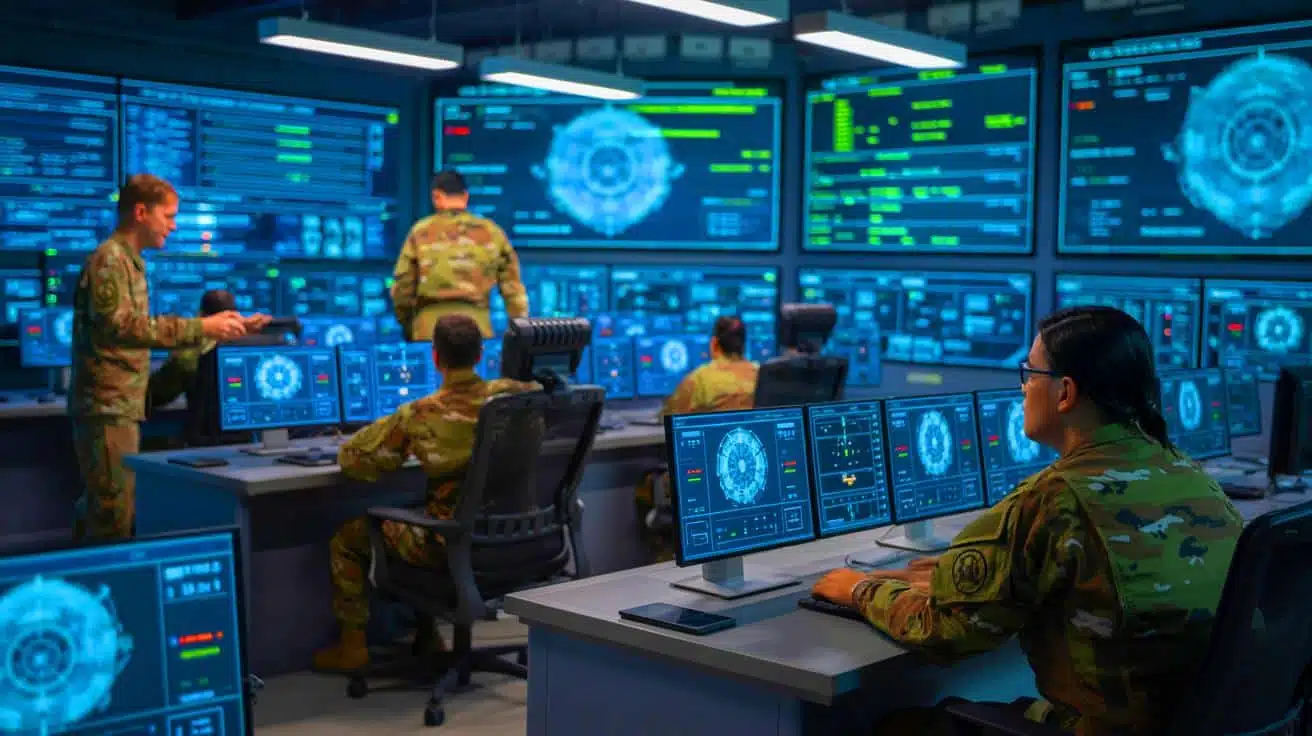
Military Data Fusion: Modern militaries are focused on creating “data lakes” that fuse information from drones, satellites, radar, and soldiers’ equipment. This data is used to train AI for battlefield awareness, target identification, and predictive logistics, creating a decisive information advantage.
C. The Compute Crunch: The Quest for Processing Supremacy
The computational power required to train state-of-the-art AI models is growing at a rate that outstrips Moore’s Law, creating a strategic bottleneck.
C.1. The Scramble for Advanced Hardware
The design and manufacturing of advanced AI chips have become a critical geopolitical and economic battleground.
-
The NVIDIA Dominance and Alternatives: NVIDIA’s GPUs have become the de facto standard for AI training. The global demand for their highest-end chips far exceeds supply, giving the company enormous leverage. This has triggered a massive push by other players, including Google (with its TPUs), Amazon (Inferentia), and Intel (Gaudi), to develop competitive alternatives and break the monopoly.
-
Export Controls as a Weapon: The United States has implemented stringent export controls on advanced AI chips and chip-making equipment to China. This is a direct attempt to slow down China’s AI advancement by restricting its access to the computational building blocks necessary for training cutting-edge models, a clear use of technological supply chains as a tool of statecraft.
-
The Quantum Computing Wildcard: While still in its infancy, the nation or company that achieves “quantum supremacy” for practical applications will gain a monumental advantage. Quantum computers could potentially break current encryption and solve optimization problems that are intractable for classical computers, revolutionizing AI drug discovery, materials science, and cryptography.
C.2. The Energy and Infrastructure Challenge
The computational arms race has a massive physical footprint and energy appetite.
-
The AI Energy Crisis: Training a single large language model can consume more electricity than 100 homes use in a year. The scaling of AI is pushing the limits of global energy grids and raising serious environmental concerns, forcing a parallel race to develop more energy-efficient algorithms and hardware.
-
Strategic Data Center Locations: The construction of massive, specialized data centers is now a strategic decision. Companies and governments are seeking locations with abundant, cheap, and clean energy sources, reliable cooling (often in colder climates), and stable political environments to host the physical infrastructure of their AI ambitions.

D. The Ideological Battle: Shaping the Global AI Order
Beyond resources, the secret AI war is a clash of ideologies and governance models that will determine whose values are encoded into the future of intelligent systems.
D.1. The Governance Model Schism
The world is fracturing into distinct camps with opposing visions for AI regulation and ethics.
-
The Western “Risk-Based” Model: Spearheaded by the European Union’s AI Act and similar frameworks, this approach focuses on categorizing AI applications by risk level and imposing strict regulations, especially on systems deemed high-risk (e.g., those used in hiring, law enforcement). It emphasizes transparency, human oversight, and fundamental rights.
-
The Chinese “State-Led” Model: China’s approach is characterized by strong state control, where AI development is explicitly directed toward national goals and social stability. Regulation is less about individual rights and more about ensuring the technology serves the state’s interests and maintains social order.
-
The US “Innovation-First” Model: The United States has largely favored a light-touch, sector-specific regulatory approach, prioritizing technological innovation and maintaining a competitive edge against China. This has led to a powerful corporate-driven AI ecosystem with less federal oversight.
D.2. The Weaponization of Information and Perception
AI itself is a powerful tool in this silent war, particularly in the realm of information and perception management.
-
Generative AI for Propaganda: State actors can use generative AI to create highly convincing, targeted disinformation campaigns at an unprecedented scale and speed, generating fake news articles, social media posts, and even synthetic videos (deepfakes) to influence public opinion and sow discord in rival nations.
-
Algorithmic Influence and Narrative Control: The control over the AI models that power search engines and social media feeds grants immense power to shape global narratives, control the flow of information, and influence cultural trends. This is a form of soft power that is increasingly being weaponized.
Conclusion: The Unchecked Race Toward an Uncertain Future
The silent AI arms race is accelerating with no established international rules of the road. The intense pressure to win is incentivizing corner-cutting on safety, ethics, and long-term risk assessment. The focus is overwhelmingly on capability and speed, often at the expense of robustness, alignment, and transparency.
This unchecked competition creates profound risks for all of humanity, from the destabilization of global security through autonomous weapons systems to the erosion of truth and the entrenchment of surveillance capitalism or digital authoritarianism. The “secret war” may be silent, but its consequences will be deafening. The critical challenge of the coming decade will be to find a way to transition from a destructive, zero-sum competition to a framework of managed competition and cooperation, establishing global norms and safeguards to ensure that the ultimate outcome of this race benefits all of humanity, not just the victors. The war is already underway, and the time to shape its outcome is rapidly running out.
Tags: AI arms race, artificial intelligence competition, AI talent war, data scarcity, compute infrastructure, AI ethics, technological cold war, AI nationalism, AI regulation, future of AI