The automobile is undergoing the most profound transformation since its invention over a century ago. For decades, a car’s value was defined by its mechanical prowess—horsepower, torque, and 0-60 mph times. Today, while performance remains important, the narrative has decisively shifted. The modern vehicle is no longer just a mode of transportation; it has evolved into a sophisticated, connected, software-defined supercomputer on wheels. This revolution is reshaping every aspect of the driving experience, from how we interact with our vehicles and navigate the world to the very fundamentals of safety and ownership. We are witnessing the convergence of the automotive and technology industries, giving birth to a new generation of cars that are intelligent, responsive, and perpetually connected, fundamentally altering our relationship with the open road.
A. The Rise of the Software-Defined Vehicle (SDV)
At the heart of this revolution is a new architectural paradigm: the Software-Defined Vehicle (SDV). Unlike traditional cars where functions were hardwired into fixed hardware, an SDV uses a centralized computing platform where software controls most of the vehicle’s features and capabilities.
A.1. Centralized Computing and Zone Architecture
The classic model of dozens of isolated Electronic Control Units (ECUs) scattered throughout the car is being replaced.
-
High-Performance Computers (HPCs): Modern vehicles now feature a handful of powerful central computers, similar to those in a laptop or server. These HPCs run a unified operating system (like Android Automotive OS or QNX) and consolidate functions that were previously managed by separate modules.
-
Simplified Wiring and Production: This shift to a zonal architecture, where computers control all systems in a specific geographic area of the car, drastically reduces the complexity and weight of the wiring harness—one of the most expensive and heaviest components in a vehicle. This simplifies manufacturing and improves reliability.
-
The Foundation for Upgrades: This centralized, software-centric approach is the essential foundation that enables all other technological advancements, from over-the-air updates to advanced autonomous driving.
A.2. Over-the-Air (OTA) Updates: The Car That Improves Itself
OTA updates are arguably the most significant consumer-facing aspect of the SDV, transforming the concept of car ownership.
-
Beyond Map and Infotainment Updates: Initially used for updating navigation maps, OTA capabilities now extend to critical vehicle functions. Manufacturers can remotely improve battery management in electric vehicles, refine powertrain calibration for better performance or efficiency, and even add new features like “dog mode” or enhanced driver-assistance functions.
-
Proactive Maintenance and Diagnostics: The vehicle can continuously monitor its own health. If it detects a minor software anomaly or a potential hardware issue, it can alert the driver and, in some cases, the manufacturer’s service center can schedule a proactive repair before the problem leads to a breakdown, enhancing safety and convenience.
-
Resale Value and Longevity: A car that can receive regular software improvements remains modern and secure for years longer than a static vehicle. This has the potential to significantly slow depreciation and extend the usable life of the car, changing the economics of ownership.
B. The Connectivity Ecosystem: The Car as a Network Node
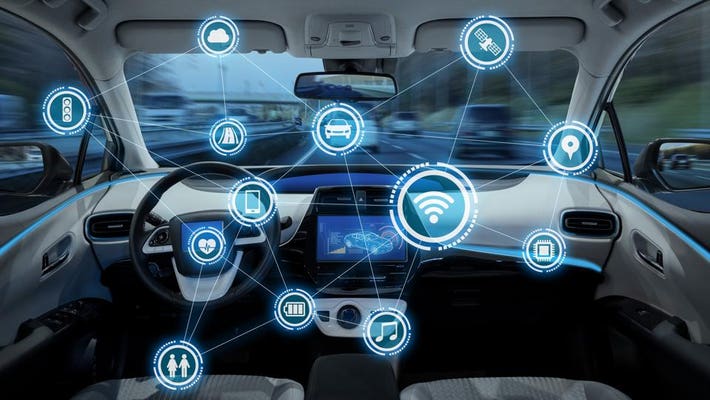
The modern car is a hub of constant data exchange, connecting to the cloud, other vehicles, infrastructure, and the driver’s personal digital life.
B.1. V2X Communication: The Collaborative Car
Vehicle-to-Everything (V2X) communication allows a car to talk to the world around it, creating a cooperative intelligence network.
-
Vehicle-to-Vehicle (V2V): Cars can share real-time data about their speed, position, and braking status with each other. This creates a 360-degree awareness that can warn drivers of hazards beyond the line of sight, such as a car braking hard several vehicles ahead in dense fog.
-
Vehicle-to-Infrastructure (V2I): Cars communicate with traffic lights, road signs, and construction zones. Your car could receive a signal from a traffic light indicating how long until it turns red, allowing it to advise an optimal speed or, in an autonomous vehicle, adjust its pace accordingly to improve traffic flow.
-
Vehicle-to-Pedestrian (V2P): Using smartphone connectivity or dedicated short-range communications, the car can detect the presence of pedestrians and cyclists, even if they are obscured, providing crucial warnings to the driver and activating automatic emergency braking if necessary.
B.2. The Integrated Digital Cockpit and Personalized Experience
The infotainment system has evolved from a simple radio into a comprehensive digital command center.
-
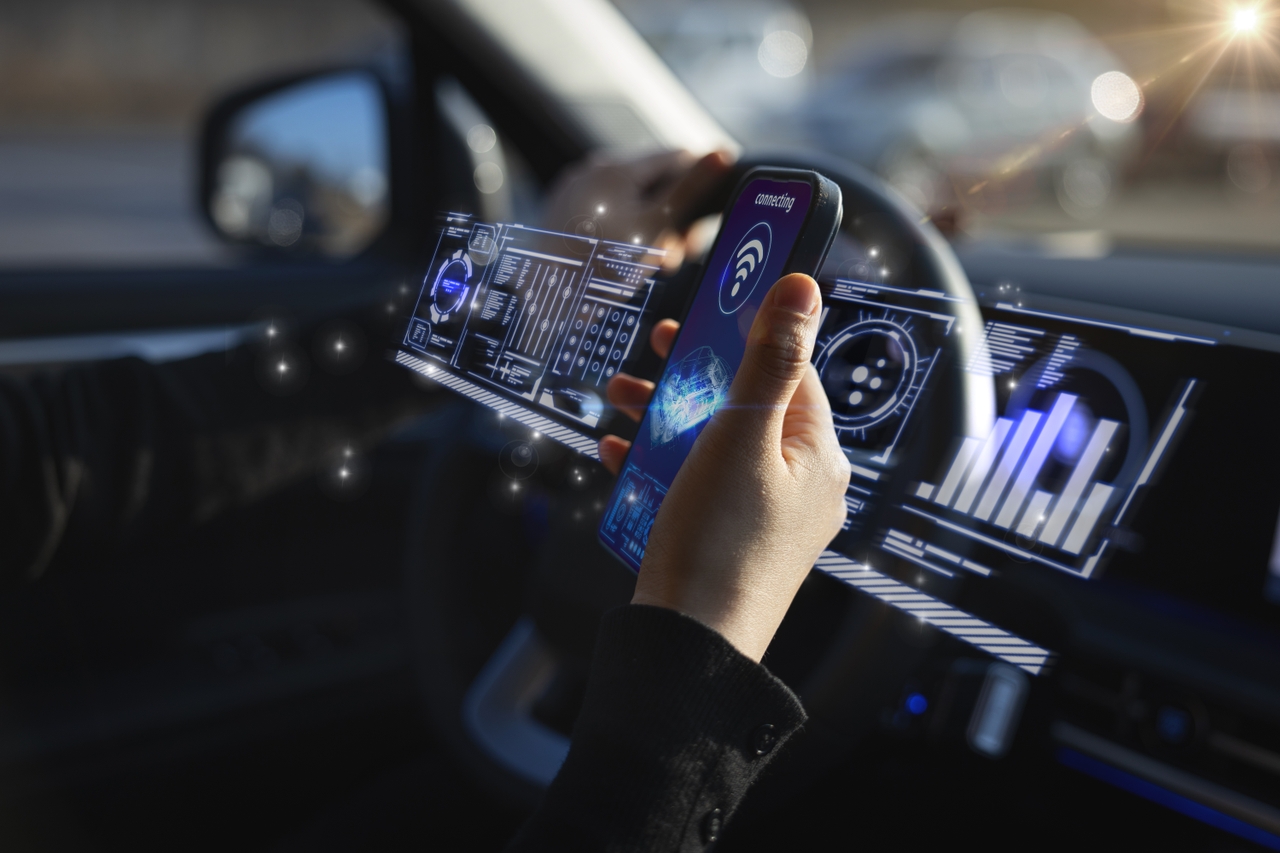
Seamless Smartphone Integration: Technologies like Apple CarPlay and Android Auto have become standard, projecting a familiar and safe interface onto the car’s screen. The next generation of these systems is deeply integrated, allowing control of vehicle functions like climate control and radio directly through the smartphone interface.
-
User Profiles and Biometrics: Cars can store multiple driver profiles that automatically adjust seating position, mirror angles, climate preferences, and even entertainment playlists. Facial recognition and fingerprint scanners can be used for authentication, enabling personalized settings and secure in-car payments for fuel, parking, and drive-throughs.
-
In-Car Subscriptions and Services: The connected car has opened a new revenue stream for manufacturers through subscription services. This includes everything from premium connectivity packages with live traffic and streaming music to feature-on-demand services like monthly subscriptions for enhanced performance, advanced driver-assistance systems, or even heated seats.
C. Advanced Driver-Assistance Systems (ADAS): The Stepping Stones to Autonomy
While fully self-driving cars remain on the horizon, ADAS features are already making driving significantly safer and less stressful.
C.1. Sensor Fusion: The Car’s Sensory Suite
ADAS relies on a complex array of sensors that work together to create a robust model of the vehicle’s environment.
-
Cameras: Provide rich visual data for lane recognition, traffic sign detection, and object classification (e.g., distinguishing a pedestrian from a cyclist).
-
Radar: Excellent for measuring the distance and relative speed of objects, even in adverse weather conditions like heavy rain or fog. It is the primary sensor for adaptive cruise control and forward collision warning.
-
LiDAR (Light Detection and Ranging): Uses laser pulses to create a high-resolution 3D point cloud of the environment. It provides precise depth perception and is considered by many to be a critical safety redundancy for achieving higher levels of autonomy.
-
Ultrasonic Sensors: Used for low-speed maneuvers, primarily for parking assistance and detecting curbs and other nearby obstacles.
C.2. Key ADAS Features and Their Impact
These fused sensor data powers a suite of life-saving and convenience features.
-
Adaptive Cruise Control (ACC) with Stop-and-Go: Maintains a set speed and a safe following distance from the car ahead, even bringing the vehicle to a complete stop in traffic and resuming motion automatically.
-
Lane Keeping Assist (LKA) and Lane Centering: Actively helps keep the vehicle centered in its lane, providing gentle steering corrections to prevent unintentional drifting.
-
Automatic Emergency Braking (AEB) with Pedestrian/Cyclist Detection: The system can apply the brakes automatically if it detects an imminent collision with a vehicle, pedestrian, or cyclist, and the driver fails to react.
-
Blind-Spot Monitoring (BSM) and Rear Cross-Traffic Alert (RCTA): Warns the driver of vehicles in their blind spot during lane changes and alerts them to approaching traffic when reversing out of a parking space.
D. The Electric Vehicle (EV) Technology Surge
The tech revolution is intrinsically linked to the shift towards electrification, as EVs provide the ideal platform for advanced software and connectivity.
D.1. The EV as a Software Platform
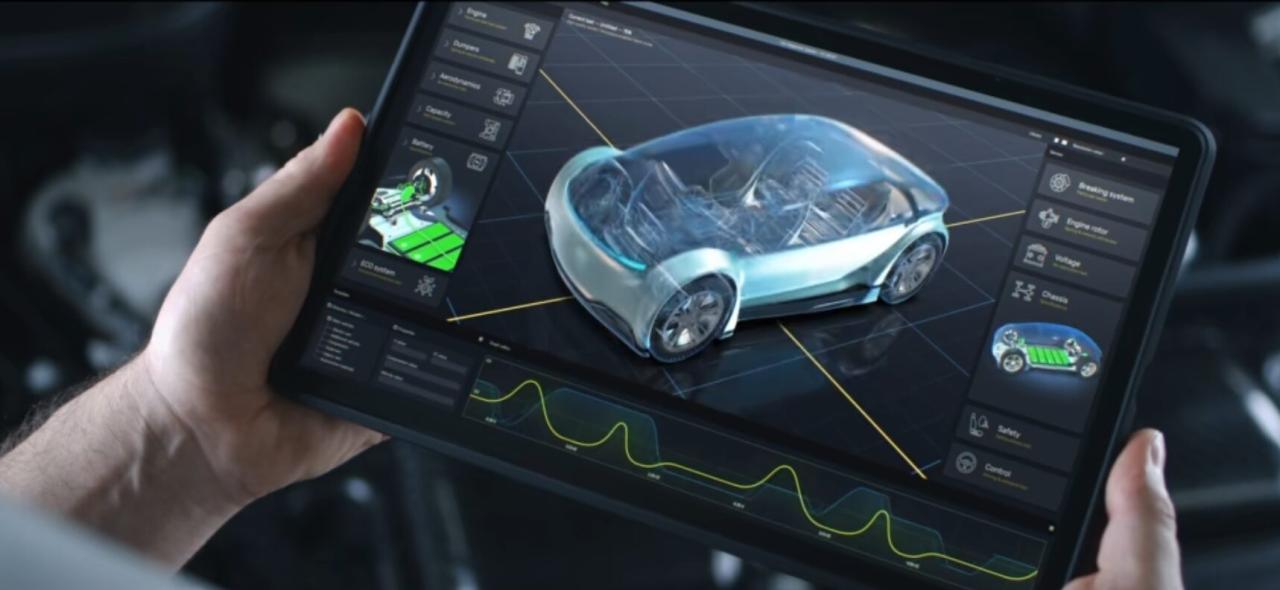
Electric vehicles, with their simpler powertrains and inherent digital nature, are natural Software-Defined Vehicles.
-
Advanced Battery Management Systems (BMS): The BMS is a sophisticated piece of software that monitors the health, temperature, and state of charge of every cell in the battery pack. OTA updates can continuously optimize charging speeds, maximize range, and prolong the overall battery lifespan.
-
Connected Charging and Energy Management: Your EV can communicate with charging networks to find available stations, pre-condition the battery for optimal charging speed, and even schedule charging during off-peak electricity hours. With bi-directional charging, the car can act as a backup power source for your home (Vehicle-to-Home or V2H) or to stabilize the local power grid (Vehicle-to-Grid or V2G).
D.2. The Redefined User Experience for EVs
EV technology has introduced entirely new interfaces and functionalities.
-
Regenerative Braking and One-Pedal Driving: This system captures kinetic energy during deceleration and converts it back into electricity to recharge the battery. It allows for “one-pedal driving,” where lifting off the accelerator provides significant braking force, often making the brake pedal unnecessary in city driving.
-
Mobile App Integration and Pre-Conditioning: Owners can use a smartphone app to check the state of charge, start charging, and pre-heat or pre-cool the cabin while the car is still plugged in, ensuring a comfortable temperature and preserving battery range for the journey ahead.
E. Challenges and The Road Ahead
This rapid technological advancement is not without its significant challenges and ethical considerations.
E.1. Data Privacy and Cybersecurity
A connected car generates terabytes of data about its drivers, passengers, and surroundings.
-
The Data Goldmine: This data, including location history, driving behavior, and even audio from the cabin, is incredibly valuable. The industry must establish clear, transparent policies on data ownership, consent, and usage to prevent misuse.
-
The Hacking Threat: A connected car is a potential entry point for cyberattacks. A malicious actor could theoretically take control of critical systems like steering or braking. Manufacturers must implement robust, multi-layered cybersecurity protocols and commit to providing lifelong security updates, just as software companies do.
E.2. The Digital Divide and Cost of Repair
This technology surge risks creating a two-tier automotive market.
-
Feature Subscription Fatigue: Consumers may rebel against paying monthly fees for features that are hardware-enabled in their car, such as heated seats or performance boosts, leading to “subscription fatigue.”
-
Right-to-Repair and Diagnostic Data: As cars become more complex, independent repair shops may be locked out of diagnostics and repairs, forcing owners to rely exclusively on expensive dealership networks. The “Right-to-Repair” movement is fighting for access to this software and data.
Conclusion: An Evolving Partnership Between Driver and Machine
The technological revolution in the automobile is fundamentally reshaping it from a privately owned tool into a connected, updatable, and intelligent platform. This shift promises a future with dramatically improved safety, unparalleled convenience, and new levels of personalization. However, it also demands a new social contract regarding data privacy, cybersecurity, and consumer rights. The car of the future is not just about getting from point A to point B; it’s about the experience, the data, and the services that happen along the way. We are no longer just drivers; we are users of a complex, rolling tech platform, and the journey has only just begun.
Tags: connected car technology, software defined vehicle, over the air updates, V2X communication, ADAS systems, electric vehicle tech, car infotainment, future of driving, automotive software, vehicle cybersecurity