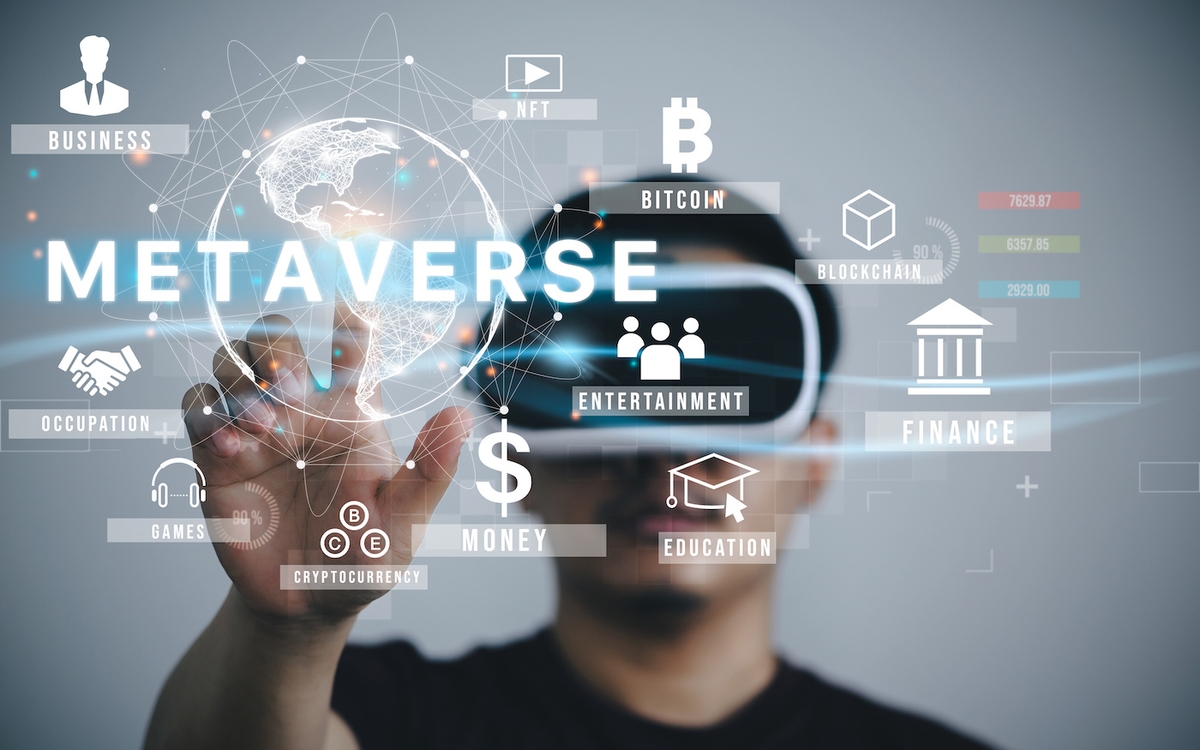
The popular narrative of the metaverse, fueled by massive media attention and corporate rebranding, has often depicted a future of consumer-centric virtual worlds—a place for socializing in digital concerts, buying virtual real estate, and living a parallel digital life through avatars. However, after an initial period of hype and speculation, the trajectory of the metaverse is taking a surprising and decidedly pragmatic turn. The most significant and impactful developments are no longer primarily happening in the consumer space but are instead rapidly unfolding within corporate boardrooms, factory floors, and research laboratories. The metaverse is evolving from a entertainment-focused digital playground into a powerful suite of enterprise-grade technologies focused on solving real-world business problems, driving efficiency, and fostering innovation. This shift from a consumer fantasy to an industrial and professional toolset represents the most profound and promising new direction for this transformative technology.
A. Deconstructing the Metaverse: Beyond the Hype
To understand this shift, we must move beyond the sci-fi definition and view the metaverse not as a single, unified virtual space, but as a convergence of several key technologies.
A.1. The Core Pillars of the Industrial Metaverse
The enterprise metaverse is built on a foundation of interconnected digital capabilities:
-
Digital Twins: These are dynamic, virtual replicas of physical assets, processes, or systems. A digital twin is continuously updated with data from its physical counterpart via sensors, Internet of Things (IoT) devices, and other sources, allowing for real-time monitoring, simulation, and analysis.
-
Extended Reality (XR): This umbrella term encompasses Virtual Reality (VR – fully immersive), Augmented Reality (AR – digital overlays on the real world), and Mixed Reality (MR – a blend of both). In an enterprise context, XR is the interface for interacting with digital twins and complex data.
-
Spatial Computing: This refers to the ability of computers to understand and interact with the 3D space around them. It allows digital content to coexist and interact with the physical world in a context-aware manner.
-
Blockchain and Interoperability: While less prominent in the immediate enterprise focus, blockchain technology provides the foundation for secure, transparent digital ownership of assets and could enable interoperability between different digital platforms in the future.
A.2. The Pivot from B2C to B2B: A Market Correction
The cooling of consumer metaverse hype has coincided with a surge in enterprise investment. This is not a coincidence but a market correction towards areas with clear, measurable return on investment (ROI).
-
The ROI Imperative: Corporations are investing in technologies that can reduce costs, accelerate time-to-market, and minimize operational risk. The industrial metaverse delivers tangible value in these areas, whereas the consumer metaverse’s revenue model remains largely unproven.
-
Solving Concrete Pain Points: Businesses are applying metaverse technologies to specific, high-value problems such as remote collaboration for complex engineering, immersive training for dangerous procedures, and predictive maintenance of expensive machinery.

B. The Industrial and Manufacturing Metaverse
The factory floor is becoming one of the most fertile grounds for metaverse technology, creating what is often termed the “Industrial Metaverse.”
B.1. Digital Twin-Driven Operations
Digital twins are revolutionizing how products are designed, manufactured, and maintained.
-
Virtual Prototyping and Design: Companies like Airbus and BMW are creating full digital twins of new aircraft and vehicles long before any physical prototype is built. Engineers from around the world can collaborate in a virtual space to assemble and disassemble the prototype, identifying design flaws and interference issues that would be costly to fix later in the physical production process. This dramatically reduces development time and cost.
-
Predictive Maintenance and Operational Optimization: A digital twin of a manufacturing plant can simulate production lines in real-time. By feeding live sensor data from robots and machines into the twin, AI can predict when a component is likely to fail, allowing for maintenance to be scheduled during planned downtime, thus avoiding catastrophic production halts. It can also run “what-if” scenarios to optimize energy consumption and workflow for maximum efficiency.
B.2. Augmented Workforce and Training
XR technologies are empowering frontline workers with superhuman capabilities.
-
Remote Expert Assistance: A field technician repairing a complex piece of equipment can wear AR glasses that allow an expert engineer from another country to see what they see. The remote expert can then annotate the technician’s real-world view with arrows, diagrams, and instructions, guiding them through the repair step-by-step. This reduces travel costs, minimizes downtime, and empowers less experienced technicians.
-
Immersive Safety and Skills Training: Instead of reading a manual, trainees can use VR to practice operating heavy machinery or performing complex surgical procedures in a risk-free, virtual environment. They can be exposed to rare but dangerous scenarios, like a chemical plant leak or a fire, to build muscle memory and critical decision-making skills without any real-world danger.
C. The Enterprise Collaboration Metaverse
The concept of the “virtual office” is evolving beyond video calls into persistent, 3D collaborative spaces designed for specific professional tasks.
C.1. The Future of Hybrid Work and Design
Spatial computing is creating new paradigms for how distributed teams work together.
-
Spatial Design Reviews: Architects, engineers, and clients can meet inside a 1:1 scale digital twin of a building before it is constructed. They can walk through the spaces, test different lighting conditions, and make changes to materials and layouts in real-time, achieving a level of understanding impossible with 2D blueprints or renders.
-
Virtual Command Centers: For managing complex projects like space missions or city-wide event logistics, teams can use a shared virtual command center. Data visualizations can be displayed in 3D, and team members, represented by avatars, can interact with the data and each other as if they were in the same physical room, fostering a deeper level of situational awareness and collaboration.
C.2. Revolutionizing Sales, Marketing, and Customer Experience
Businesses are leveraging the metaverse to create immersive customer engagements.
-
Virtual Showrooms and Product Configurators: Automotive companies like BMW allow customers to explore and customize a photorealistic digital model of a car in VR, changing colors, interiors, and features instantly. This provides a much richer experience than a static website or even a physical showroom with limited inventory.
-
Try-Before-You-Buy in AR: Furniture retailers like IKEA have led the way with AR apps that let you place virtual furniture in your actual living room to see how it fits and looks. This technology is expanding to fashion, allowing virtual try-ons for clothes and accessories, reducing return rates and increasing consumer confidence.
D. The Healthcare and Education Metaverses
Two of the most socially impactful applications of the metaverse are emerging in the fields of healthcare and education.
D.1. The Surgical and Therapeutic Metaverse
The healthcare industry is adopting metaverse technologies for training, treatment, and therapy.
-
Surgical Planning and Simulation: Surgeons can use a patient’s MRI or CT scan data to create a precise digital twin of their anatomy, such as a heart or a brain. They can then practice a complex surgical procedure on this virtual model numerous times, planning the optimal approach and anticipating complications before ever making an incision on the actual patient.
-
Mental Health and Exposure Therapy: VR is being used to create controlled, safe environments for treating phobias (like fear of heights or flying) and Post-Traumatic Stress Disorder (PTSD). Patients can be gradually and safely exposed to their triggers under the guidance of a therapist, with the ability to instantly modulate the intensity of the experience.
D.2. The Immersive Classroom
Education is being transformed from a passive to an experiential learning model.
-
Experiential Learning: Instead of reading about ancient Rome, students can take a guided VR tour of a historically accurate reconstruction of the Roman Forum. Medical students can “travel” inside a virtual human body to understand human anatomy in a way textbooks could never convey.
-
Skills-Based and Vocational Training: From welding to electrical engineering, VR provides a safe, cost-effective platform for students to gain hands-on experience with tools and procedures, making them job-ready without the need for expensive physical equipment or materials.
E. Challenges and The Path to Widespread Adoption
Despite its promise, the enterprise metaverse faces significant hurdles that must be overcome to achieve mainstream adoption.
E.1. Technological and Infrastructural Hurdles
The vision requires robust underlying technology.
-
Computing Power and Latency: Creating and running high-fidelity digital twins and immersive XR experiences requires immense computational resources, often delivered via cloud computing. Low latency is critical for realistic and comfortable interactions, demanding powerful and widespread 5G/6G networks.
-
Hardware Cost and Comfort: While improving, high-end VR/AR headsets are still expensive and can be cumbersome for all-day use. The development of lighter, more affordable, and more socially acceptable glasses-style devices is crucial for broad adoption.
E.2. Strategic and Organizational Challenges
The human and business factors are just as important as the technological ones.
-
Interoperability and Data Silos: For the metaverse to reach its full potential, different digital twins and platforms need to be able to communicate and share data seamlessly. Currently, many systems are proprietary and closed, creating data silos.
-
Cybersecurity and Data Privacy: An enterprise metaverse dealing with proprietary product designs, sensitive patient data, or critical infrastructure control systems is a prime target for cyberattacks. Robust security frameworks are non-negotiable.
-
The Skills Gap and Change Management: Successfully implementing these technologies requires a workforce skilled in 3D modeling, data science, and XR development. Companies must invest in upskilling their employees and managing the cultural change that comes with new ways of working.
Conclusion: The Invisible Metaverse
The most successful technology is often the one that becomes invisible, seamlessly integrated into our daily workflows. The surprising new direction of the metaverse points toward this future—not as a flashy virtual world we escape to, but as a powerful, practical layer of intelligence over our physical reality. It will be the interface engineers use to design smarter products, the tool surgeons use to save lives, and the platform that trains the workforce of tomorrow. By focusing on solving real problems and delivering tangible value, the metaverse is shedding its skin as a speculative consumer trend and emerging as a foundational pillar of the next generation of industrial and professional innovation. Its ultimate success will be measured not in user hours spent in a virtual realm, but in its quiet, pervasive impact on productivity, safety, and human capability.
Tags: enterprise metaverse, digital twin technology, industrial metaverse, augmented reality workforce, virtual reality training, spatial computing, future of work, B2B metaverse, XR collaboration, metaverse applications