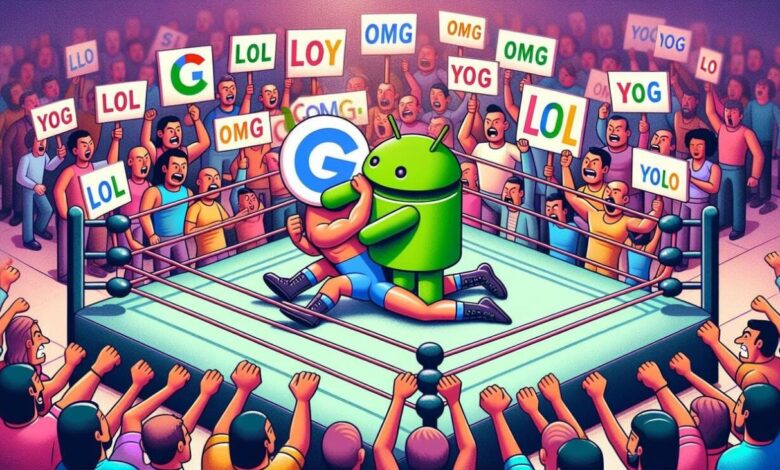

For over two decades, Google has reigned as the undisputed gateway to the internet. Its name has become a verb, and its search engine processes trillions of queries annually, shaping global access to information, commerce, and knowledge. This dominance, built on a revolutionary page-ranking algorithm and a ubiquitous digital advertising empire, has seemed unassailable. However, the tectonic plates of the tech landscape are shifting. The very definition of “search” is being rewritten not by a direct competitor offering a better blue-link results page, but by a convergence of new paradigms: the intuitive power of generative AI, the privacy-focused ethos of a new web, and the fundamental changes in how younger generations discover information. The search for the “next Google killer” is not a quest for a single company to dethrone the king, but an exploration of the fragmented, intelligent, and contextual future of information retrieval itself. The successor to Google may not be a search engine at all, but a constellation of technologies and platforms that collectively erode its central role in our digital lives.
A. Deconstructing the Fortress: The Pillars of Google’s Dominance
To understand how Google could be challenged, we must first understand the foundations of its immense power.
A.1. The Unbeatable Flywheel: Data, Users, and Advertisers
Google’s business model is a self-reinforcing economic engine of incredible power.
-
The User-Data Cycle: Billions of users perform searches, providing Google with an unprecedented dataset of human intent, questions, and behavior. This data is the fuel.
-
Algorithmic Refinement: This data trains and refines its search algorithms, making them more accurate and valuable than any competitor’s, which in turn attracts more users, generating even more data.
-
The Advertising Juggernaut: Advertisers are compelled to pay a premium to reach this vast, targeted audience. The immense profits from advertising fund massive investments in infrastructure, R&D, and talent, further widening the moat against competitors.
A.2. The Ecosystem Lock-In: More Than Just Search
Google’s strength lies in its deeply integrated ecosystem that creates immense user inertia.
-
The Android Stratagem: By making Android open-source, Google ensured its services (Search, Maps, Gmail, YouTube, the Play Store) became the default experience on the vast majority of the world’s smartphones. Leaving Google Search often means disrupting an entire, convenient digital life.
-
Browser Dominance with Chrome: Chrome is the world’s most popular web browser, and its default search engine is, unsurprisingly, Google. This creates a powerful, default pathway for billions of web queries.

B. The Challengers Emerge: New Paradigms for Finding Information
The assault on Google’s fortress is coming from multiple directions, each attacking a different weakness.
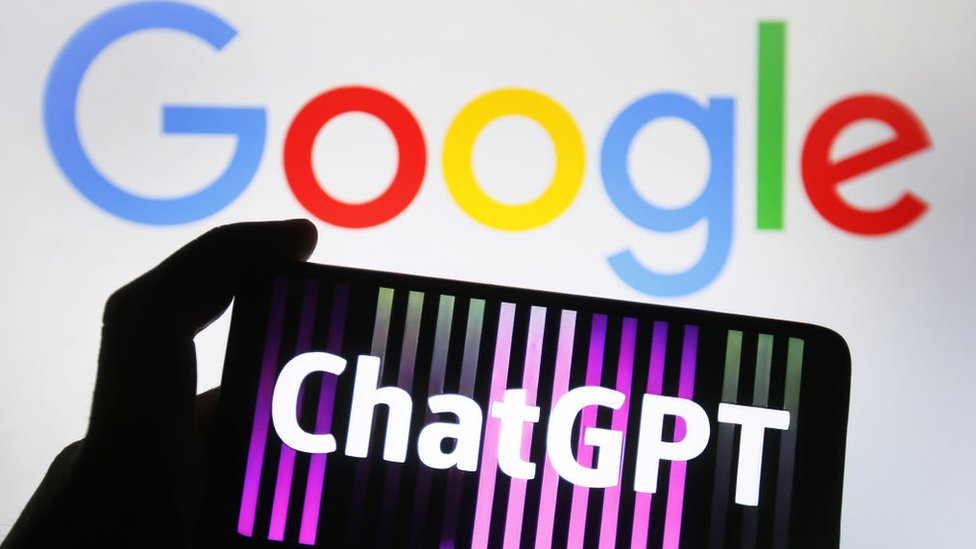
B.1. The Generative AI Revolution: ChatGPT and Perplexity
The arrival of large language models (LLMs) has presented the first credible threat to the traditional search model in years.
-
The Conversational Interface: Platforms like OpenAI’s ChatGPT and Perplexity.ai offer a fundamentally different user experience. Instead of a list of links, users receive a direct, conversational answer synthesized from multiple sources. This is faster and more intuitive for complex, research-oriented queries.
-
The Threat of Disintermediation: When an AI provides a summarized answer, users may never click through to the original websites. This breaks Google’s core value proposition to both users (find websites) and publishers (get traffic), potentially collapsing the entire ecosystem.
-
Google’s Defensive Play: Gemini and AI Overviews: Google’s response has been swift, integrating its own AI (Gemini) directly into search results with “AI Overviews.” This is a risky strategy, as it too could reduce click-through rates to publishers, but it is a necessary evolution to stay relevant.
B.2. The Vertical Search Specialists: Quality Over Quantity
For specific types of queries, users are increasingly bypassing Google for specialized platforms that offer superior results.
-
Amazon for Product Search: When people want to buy something, they often start directly on Amazon. The platform offers richer information (reviews, prices, availability) in a more useful format than Google’s shopping results.
-
TikTok and Instagram for Discovery: For younger users, search is not about finding facts but discovering trends, ideas, and experiences. Platforms like TikTok and Instagram have become the go-to “search engines” for everything from restaurant recommendations and travel ideas to DIY tutorials. The video-first, algorithmically-driven feed is a more engaging discovery mechanism for this demographic.
-
Spotify for Podcasts and Music, Reddit for Authentic Reviews: Users trust niche communities and dedicated platforms for specific information needs, valuing the authenticity of Reddit’s user reviews (“Reddit” is now a common search suffix on Google itself) or the depth of Spotify’s audio library.
B.3. The Privacy-First Insurgents: DuckDuckGo and Brave
A growing segment of users is deeply concerned about data collection and profiling.
-
The Core Value Proposition: Search engines like DuckDuckGo and Brave Search explicitly promise not to track users or create personalized profiles. They have carved out a loyal user base by aligning with the values of privacy and anonymity.
-
The Scaling Challenge: While they are successful in their niche, their lack of personalized data can sometimes lead to less relevant results compared to Google’s hyper-personalized engine. Their growth is also limited by the fact that they often rely on other companies’ indexes (like Microsoft Bing) rather than building their own at Google’s scale.
C. The Structural Shifts: Changing How We Interact with Information
Beyond specific competitors, broader technological and societal shifts are undermining the traditional search model.
C.1. The Rise of Voice and Ambient Computing
The way we input queries is changing, and this change favors different players.
-
Voice Assistants as Gatekeepers: When you ask a question to Amazon’s Alexa, Apple’s Siri, or Samsung’s Bixby, you are at the mercy of their chosen answer providers. Google Assistant is a major player here, but it does not have a monopoly. This shifts the battleground from the search bar to the smart speaker and the operating system.
-
The “Zero-Click” Future: Voice answers and AI summaries provide information without a single click. This trend, which Google itself is accelerating with its AI Overviews, fundamentally challenges the page-view-based business model of both Google and the open web.
C.2. The Appification of the Internet and the Walled Gardens
The modern internet experience is increasingly siloed within mobile apps.
-
The Decline of the Open Web: A massive amount of valuable, dynamic information is locked inside “walled gardens” like Facebook, Instagram, and TikTok. Google’s crawlers cannot effectively index this real-time, social, or private content, making its search results incomplete.
-
In-App Search Dominance: Users are conditioned to search within the apps they use most frequently—be it Airbnb for lodging, DoorDash for food, or LinkedIn for professional networking. Each of these is a vertical search engine that chips away at Google’s universality.
D. The Potential “Killers”: Scenarios for a Post-Google World
It is unlikely that one company will simply “replace” Google. Instead, we are heading toward a future where its dominance is eroded by a combination of forces.
D.1. The AI-Native Ecosystem: The OpenAI/Microsoft Alliance
Microsoft, with its multi-billion-dollar investment in OpenAI, is positioning itself as the leading AI-first alternative.
-
Integration into the Productivity Stack: By embedding Copilot (powered by OpenAI’s models) directly into Windows, Microsoft 365, and its Edge browser, Microsoft is making an AI assistant the default tool for knowledge work. Searching for information could become a seamless part of writing a document or preparing a presentation, bypassing a trip to Google.com entirely.
-
The B2B Beachhead: Microsoft is aggressively targeting the enterprise market, where it already has deep trust and integration. If companies standardize on Microsoft’s AI for internal knowledge management, it creates a powerful, paid alternative to Google’s ad-supported public search.
D.2. The Apple Wildcard: Privacy and Ecosystem Integration
Apple possesses a unique set of advantages that could allow it to mount a serious challenge, should it choose to do so.
-
The Ultimate Distribution: Apple controls the default search experience on over a billion iPhones, iPads, and Macs. It currently pays Google billions annually to be the default on Safari, but it has the capability to develop or acquire its own search technology.
-
The Privacy-Centric Brand: Apple’s entire brand is built on privacy, a direct contrast to Google’s data-collection model. An Apple search engine, potentially enhanced by on-device AI, could be marketed as the “private” alternative, a powerful message in today’s climate.
-
Vertical Integration: By integrating search deeply into iOS, Siri, and Spotlight, Apple could create a seamless, context-aware discovery tool that feels more native and powerful than a standalone website or app.
D.3. The Fragmented Future: A World of Contextual Assistants
The most likely outcome is not a new monopoly, but a fragmented landscape of intelligent agents.
-
The End of “One Search to Rule Them All”: We will use different tools for different tasks: a conversational AI for research, a video platform for inspiration, a shopping app for products, and a privacy-focused engine for sensitive queries.
-
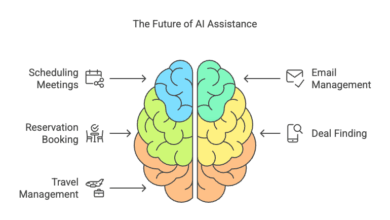
The Invisible Interface: The ultimate “Google killer” may be the disappearance of the search box altogether. Information will be delivered to us proactively by AI assistants that understand our context and needs, rendering the act of “googling” something an obsolete behavior.
Conclusion: The King is Not Dead, But His Kingdom is Changing
Declaring the imminent death of Google would be premature. The company retains unparalleled resources, talent, data, and user loyalty. Its aggressive push into AI demonstrates a clear awareness of the threat and a capacity for adaptation. However, the era of its undisputed supremacy is drawing to a close. The monolithic model of a single, all-knowing search engine is being challenged by a more modular, intelligent, and specialized future. The next “Google killer” will not be a company that builds a better link directory; it will be the paradigm shift toward a world where finding information is a conversational, contextual, and often invisible part of our digital interactions. The revolution is not about killing the king, but about dismantling his castle and redistributing its treasures across a new, more diverse digital republic.
Tags: Google competitor, future of search, AI search engines, ChatGPT vs Google, Perplexity AI, privacy focused search, post-Google internet, search engine trends, OpenAI search, Apple search engine