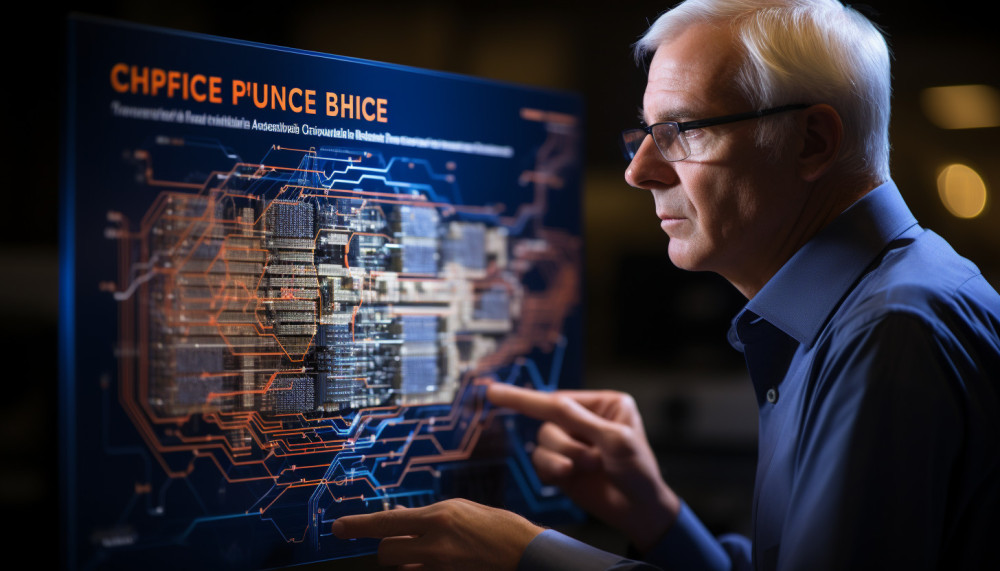
For over half a century, the engine of the digital revolution has been powered by a single, remarkable invention: the silicon transistor. The relentless pace of Moore’s Law—the observation that the number of transistors on a microchip doubles about every two years—has given us the smartphones, the internet, and the artificial intelligence that define modern life. However, this golden era is facing an existential threat. We are approaching the fundamental physical limits of silicon. Transistors are now so small that they are measured in atoms, where quantum effects and atomic-scale imperfections make further miniaturization incredibly difficult and prohibitively expensive. The question is no longer if we will hit a wall, but what lies beyond it. The future of computing is being forged in laboratories around the world, exploring a new generation of technologies that move beyond the silicon chip. This journey is leading us toward a post-silicon era defined by quantum weirdness, brain-inspired architectures, and molecular-scale engineering, promising to unlock computational power that will make today’s supercomputers look like simple abacuses.
A. The Silicon Ceiling: Why We Need a New Path
To understand the urgency of this search, we must first appreciate the profound challenges confronting conventional silicon-based computing.
A.1. The Physical and Quantum Limits
The laws of physics are imposing hard barriers that even the most advanced engineering cannot overcome.
-
Atomic Scale Limitations: The most advanced silicon transistors now have features as small as 2 nanometers—roughly the width of a few silicon atoms. At this scale, electron behavior becomes unpredictable due to quantum tunneling, where electrons spontaneously “jump” through barriers that should contain them, leading to power leakage, errors, and heat dissipation problems that are incredibly difficult to manage.
-
The Heat Wall: As transistor density increases, so does power density. We are creating chips so powerful that they are becoming difficult to cool efficiently. The heat generated by dense computational tasks is now a primary constraint on performance, a problem known as the “power wall” or “dark silicon,” where parts of a chip must be powered down to prevent overheating.
A.2. The Economic Limits: The End of Moore’s Law’s Affordability
The financial cost of continuing down the silicon path is becoming astronomical.
-
Skyrocketing Fabrication Costs: Building a single state-of-the-art semiconductor fabrication plant (or “fab”) now costs over $20 billion. The research and development for each new process node is exponentially more expensive, concentrating advanced chip manufacturing into the hands of only a few corporations and nations. This economic model is becoming unsustainable for the entire industry.

B. The Quantum Leap: Harnessing the Power of Qubits
One of the most promising and hyped frontiers is quantum computing, which leverages the strange rules of quantum mechanics to solve problems that are intractable for classical computers.
B.1. The Fundamental Principles of Quantum Computing
Quantum computers operate on principles that are fundamentally different from binary logic.
-
Qubits and Superposition: Unlike a classical bit, which is either 0 or 1, a quantum bit (qubit) can exist in a state of 0, 1, or any probabilistic combination of both simultaneously. This property, known as superposition, allows a quantum computer to explore a vast number of possibilities at once.
-
Entanglement: This is a profound quantum connection where qubits become linked, and the state of one instantly influences the state of another, no matter the distance. This allows quantum computers to perform complex calculations with a high degree of coordination between qubits.
B.2. The Hardware Race: Building a Stable Quantum Computer
The central challenge is creating and maintaining stable qubits, leading to a diverse field of competing approaches.
-
Superconducting Qubits: The current frontrunner, used by companies like Google and IBM, involves cooling loops of superconducting metal to near-absolute zero to create and manipulate qubits. The challenge is scaling these systems while maintaining qubit stability (coherence time).
-
Trapped Ion Qubits: Companies like IonQ use electromagnetic fields to trap individual atoms (ions) in a vacuum, using lasers to manipulate their quantum states. This approach typically offers higher fidelity and longer coherence times but can be slower to execute operations.
-
Topological Qubits: A more speculative but theoretically robust approach, pursued by Microsoft, aims to create qubits by braiding exotic quantum states (anyons). The major advantage is that topological qubits would be inherently fault-tolerant, resistant to the environmental noise that plagues other types.
B.3. The “Killer Apps” for Quantum Computers
It’s crucial to understand that quantum computers will not replace classical computers for everyday tasks. Their power lies in specific, complex problems:
-
Quantum Simulation: The most natural application. Simulating molecules for drug discovery and materials science is exponentially hard for classical computers but a perfect fit for a quantum machine, which is itself a quantum system.
-
Cryptography and Factorization: Shor’s algorithm could break widely used RSA encryption, which is why there is a parallel global effort to develop “post-quantum cryptography.”
-
Optimization: From streamlining global logistics to optimizing financial portfolios, quantum algorithms could find optimal solutions in vast, complex datasets far more efficiently than classical methods.
C. Neuromorphic Computing: Engineering an Artificial Brain
Instead of building a better calculator, neuromorphic computing aims to build a computer that works like a brain.
C.1. The Principles of Brain-Inspired Computation
The human brain is the most powerful and energy-efficient computer known. Neuromorphic engineering seeks to mimic its architecture.
-
Spiking Neural Networks (SNNs): Unlike traditional artificial neural networks that process data continuously, SNNs communicate through discrete events, or “spikes,” much like biological neurons. This event-driven operation is inherently more energy-efficient, as components only consume power when they need to process information.
-
In-Memory Computing (Memristors): The von Neumann bottleneck—the delay caused by shuttling data between the central processor and separate memory—is a major performance drain. Neuromorphic chips often use memristors, circuit elements that can both store and process information, mimicking the way synapses in the brain work. This eliminates the bottleneck and drastically reduces power consumption.
C.2. Real-World Applications and Prototypes
This technology is already moving from the lab to specialized applications.
-
Edge AI and Sensor Processing: Neuromorphic chips are ideal for processing data from sensors (like cameras and microphones) in real-time on low-power devices. For example, a neuromorphic vision system in a self-driving car could identify pedestrians with minimal latency and power use.
-
Scientific Research: Systems like Intel’s Loihi 2 and IBM’s TrueNorth are being used by researchers to study neural coding and to simulate brain circuits in ways that are impossible on supercomputers.
D. The Molecular and Biological Frontier
Perhaps the most radical post-silicon visions involve using the building blocks of life and matter itself as computational substrates.
D.1. DNA Data Storage
As the world generates exponential amounts of data, we are facing a storage crisis. DNA offers a mind-bogglingly dense solution.
-
Unprecedented Density: Just one gram of DNA can theoretically store 215 petabytes (215 million gigabytes) of data. All the world’s data could fit in a single room if stored in DNA.
-
Long-Term Stability: While hard drives and tapes degrade in years or decades, DNA can remain readable for thousands of years if kept in cool, dry conditions, as evidenced by our ability to sequence ancient genomes.
-
The Read/Write Challenge: The current limitations are speed and cost. Synthesizing (writing) and sequencing (reading) DNA is still slow and expensive compared to electronic methods, but the field is advancing rapidly.
D.2. Optical and Photonic Computing
This technology replaces electrons with photons (light) to perform computations.
-
Speed and Bandwidth Advantage: Light travels faster than electrons and multiple wavelengths (colors) of light can travel through the same waveguide without interference, enabling massive parallel data transmission.
-
Overcoming the Heat Wall: Photons generate far less heat than electrons, directly addressing one of silicon’s biggest problems. Optical computing is particularly promising for specific tasks like AI inference and accelerating neural networks.
D.3. The Wildcard: Biological and Chemical Computers
Researchers are exploring the use of living cells and chemical soups as computers.
-
Cellular Logic Gates: Scientists have engineered biological circuits within living cells, creating logic gates from DNA, RNA, and proteins. These could one day be used for targeted drug delivery, where a cell becomes a computer that diagnoses and treats a disease from within the body.
-
Unconventional Chemical Computing: Experiments have shown that certain chemical reactions in a Belousov-Zhabotinsky (BZ) medium can be used to solve computational problems like finding the shortest path through a maze, suggesting that computation is a fundamental property of some physical systems.
E. The Hybrid Future and The Path to Commercialization
The post-silicon future will not be a winner-take-all race. The most likely scenario is a hybrid, heterogeneous computing landscape.
E.1. The Co-Processing Model
We will not throw away our classical computers. Instead, they will be augmented by specialized accelerators.
-
The CPU as a Conductor: The traditional silicon CPU will act as the “conductor” of an orchestra, managing workflows and offloading specific, complex tasks to the most appropriate processor: a quantum co-processor for molecular simulation, a neuromorphic chip for real-time sensor analysis, and a photonic accelerator for AI model training.
-
Cloud-Based Access: Most users will access these advanced technologies via the cloud, similar to how AI is accessed today. You won’t have a quantum computer on your desk, but you will be able to rent time on one through a cloud service for a specific task.
E.2. The Remaining Hurdles
The path from laboratory breakthrough to commercial product is long and fraught with challenges.
-
Error Correction and Stability: Quantum computers require sophisticated error correction. Neuromorphic and other novel systems need to demonstrate long-term reliability.
-
Software and Programming Paradigms: We need entirely new programming languages and algorithms to harness these exotic machines. How do you program a computer that works on probabilities (quantum) or spikes (neuromorphic)?
-
Manufacturing and Scalability: Building a few qubits or memristors in a lab is one thing; mass-producing millions of them with atomic-level precision is another monumental challenge.
Conclusion: The Dawn of a New Computational Epoch
The pursuit of computing beyond the silicon chip is more than a technical necessity; it is one of the most ambitious scientific endeavors of our time. It represents a fundamental shift from refining an existing technology to exploring entirely new paradigms of computation itself. While silicon will remain the workhorse of the industry for years to come, its successors are no longer mere theoretical curiosities. They are taking tangible form in laboratories, promising to unlock new frontiers in medicine, materials science, and our understanding of the universe. The end of the silicon road is not the end of computing progress, but the exciting beginning of a much richer and more diverse computational future, where the very definition of a “computer” is being rewritten.
Tags: post-silicon computing, quantum computing, neuromorphic computing, DNA data storage, optical computing, Moore’s Law end, future of computing, quantum vs silicon, new computing paradigms, beyond CMOS