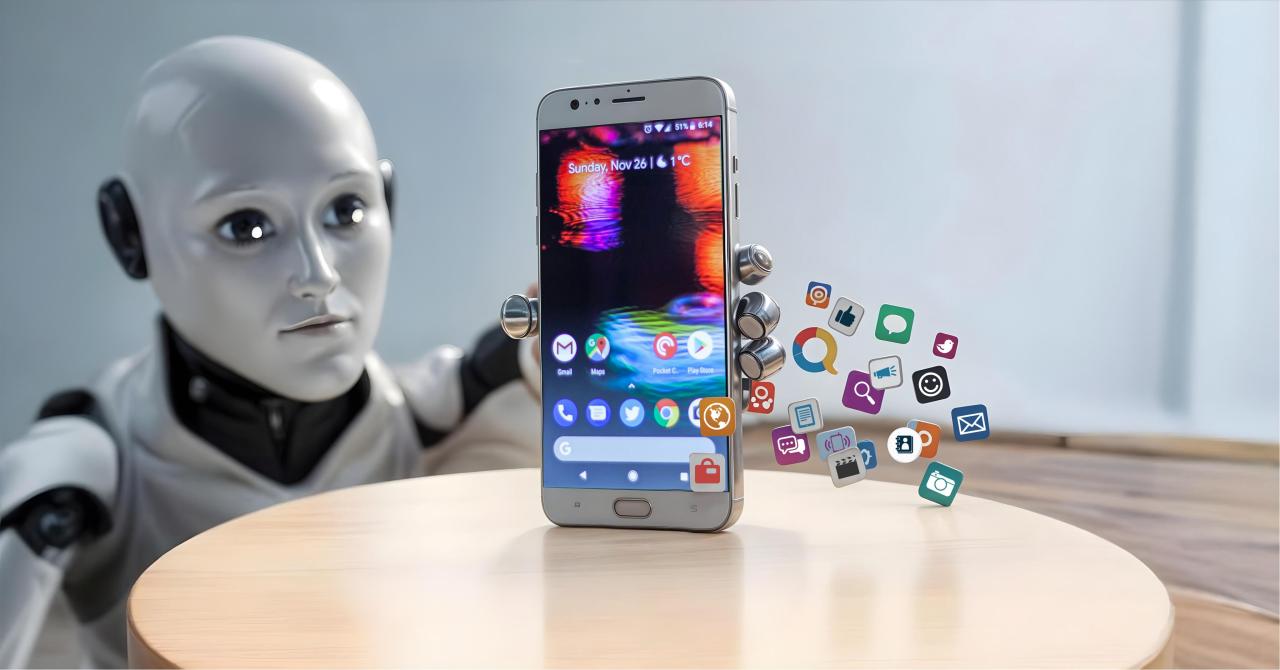
The modern smartphone has already achieved what was once the stuff of science fiction. It is a supercomputer in our pocket, a gateway to the world’s information, and a hub for our social and professional lives. For years, innovation was measured in megapixels, screen refresh rates, and processor clock speeds—a race of raw, tangible hardware. However, a profound and subtle shift is now underway. The next great leap forward is not about what your phone has, but what it knows and how it understands. Smartphones are getting smarter, transitioning from powerful but passive tools into proactive, contextual, and predictive intelligent companions. This new era of intelligence is fueled by the convergence of sophisticated on-device artificial intelligence (AI), ubiquitous connectivity, and a new generation of sensors, all working in concert to create a device that anticipates your needs, manages your world, and interacts with you in startlingly human ways.
A. The Engine Room: On-Device AI and the Neural Processing Unit (NPU)
The foundation of this new intelligence is a fundamental change in smartphone silicon. The Central Processing Unit (CPU) and Graphics Processing Unit (GPU) are now being complemented by a third, crucial component: the Neural Processing Unit (NPU) or AI Engine.
A.1. The NPU: Specialized Hardware for Intelligent Tasks
An NPU is a microprocessor specifically designed to accelerate neural network operations, which are the core of machine learning and AI.
-
Efficiency and Speed: Unlike a general-purpose CPU, an NPU is optimized for the massive, parallel computations required for tasks like image recognition and natural language processing. This allows it to perform these tasks much faster and using significantly less battery power.
-
Privacy and Latency: By processing AI tasks directly on the device, the NPU eliminates the need to send sensitive data (like your voice recordings or photos) to the cloud. This results in near-instantaneous responses for features like live translation or photo editing, and it ensures your personal data never leaves your possession.
-
The Architectural Shift: Chip manufacturers like Apple (with its Neural Engine), Qualcomm (Hexagon Processor), and Google (Tensor Processing Unit) are in an arms race to deliver more “TOPS” (Trillions of Operations Per Second), a benchmark for raw AI processing power. This dedicated hardware is what makes real-time, complex intelligence possible.
A.2. The Software Layer: Machine Learning Models and Frameworks
Hardware is useless without software. Smartphone operating systems (iOS and Android) now have deeply integrated machine learning frameworks.
-
Core ML and ML Kit: These frameworks allow developers to easily integrate pre-trained AI models into their applications, leveraging the power of the NPU for features like object detection in a camera app or sentiment analysis in a messaging app.
-
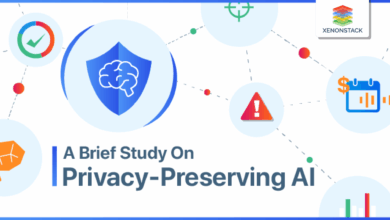
Federated Learning: This is a groundbreaking privacy-preserving technique. Instead of collecting user data on a central server, the AI model is sent to your phone, learns from your local usage, and only the anonymous, aggregated learnings (not your data) are sent back to improve the global model. Your phone literally gets smarter in a way that is unique to you, without compromising your privacy.
B. The Intelligent Features Redefining the User Experience
This powerful combination of specialized hardware and sophisticated software is manifesting in a suite of features that are fundamentally changing how we interact with our devices.
B.1. Computational Photography and Videography: The AI Photographer
The camera is no longer just about the lens and sensor; it’s about the processor’s ability to understand the scene.
-
Semantic Understanding and Segmentation: When you take a photo, your phone’s AI instantly analyzes the scene, identifying different elements like the sky, faces, hair, and background. It can then apply targeted enhancements—brightening faces, deepening blue skies, or applying a subtle bokeh effect—with stunning accuracy.
-
Night Mode and Computational Stacking: Night mode works by taking multiple images at different exposures in rapid succession. The AI then aligns these images and merges them, intelligently reducing noise and enhancing details to create a bright, clear photo from near-darkness.
-
Generative AI in Editing: The next frontier is using generative AI to manipulate photos after they are taken. This includes features like “Magic Eraser” to remove photobombers, or creating entirely new elements that blend seamlessly with the existing image, effectively allowing you to rewrite visual reality.
B.2. Proactive Assistance and Contextual Awareness
Your smartphone is evolving from a command-based interface to a context-aware partner.
-
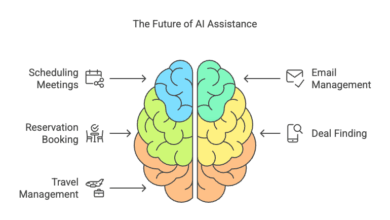
Predictive Routines and Suggestions: Based on your habits, your phone can learn that you go to the gym every weekday at 6 PM and will proactively surface your workout playlist or remind you to pack your gym bag. It can suggest you leave for the airport early based on real-time traffic conditions it has detected.
-
Live Translation and Conversation Mode: With on-device AI, your phone can now act as a real-time interpreter. You can point your camera at a foreign menu to see it translated, or have a conversation with someone who speaks a different language, with your phone transcribing and translating both sides of the dialogue in real time, all without an internet connection.
-
Enhanced Accessibility: AI is making smartphones more inclusive. Features like “Sound Recognition” can listen for a fire alarm or doorbell and send an alert to users who are deaf or hard of hearing. “Voice Control” allows for complete hands-free navigation using natural speech commands, providing independence for users with motor skill challenges.
B.3. Advanced Health and Wellness Monitoring
The smartphone is becoming a central hub for personal health, moving beyond simple step counting.
-
Advanced Sleep Tracking: Using the accelerometer, microphone (to detect snoring), and even the camera’s time-of-flight sensor to detect subtle breathing patterns, your phone can provide detailed analysis of your sleep stages without requiring a wearable device.
-
Mental Well-being and Digital Balance: AI can analyze your usage patterns to provide weekly reports on your screen time and app usage, offering gentle nudges to take a break or practice mindfulness. Some systems can even analyze speech patterns and typing behavior for signs of cognitive decline or mental health issues, prompting users to seek professional help.
-
Integration with Medical Devices: Your phone is becoming the display and data processor for a new class of medical-grade sensors, from continuous glucose monitors to smart spirometers, enabling long-term health tracking and remote patient monitoring.

C. The Next Frontier: The Hyper-Connected and Sentient Device
The intelligence of the smartphone will be amplified by its role as the command center for a wider ecosystem of devices and the integration of even more advanced AI models.
C.1. The Ubiquitous Connectivity Layer: 5G-Advanced and Beyond
While 5G provides high speed, its future iterations (5G-Advanced and 6G) are about ultra-reliable, low-latency communication (URLLC).
-
Seamless Cloud/Device Integration: This will enable a true hybrid intelligence model. Your phone will offload extremely complex AI tasks (like training a personal model on your data) to the cloud in milliseconds, while handling time-sensitive tasks on-device. The line between local and cloud processing will become invisible to the user.
-
The Phone as a Hub for Everything: Your phone will maintain constant, low-power connections to all your smart devices—earbuds, watch, car, home appliances—orchestrating them as a single, cohesive system. You won’t need to manually connect; your devices will simply know you are there and adjust accordingly.
C.2. The Large Language Model (LLM) Integration
The technology behind chatbots like ChatGPT is being shrunk down and optimized to run locally on smartphones.
-
A Truly Intelligent Personal Assistant: This will revolutionize the built-in voice assistant (Siri, Google Assistant). Instead of simple web searches and commands, you will be able to have open-ended, contextual conversations. You could ask, “Summarize the key points from the article I was reading last night and find related research papers from the last year,” and it will accomplish this complex, multi-step task.
-
Personalized Content Creation: Your phone will help you write emails in your specific tone, generate social media captions based on the content of your photo, or even help you brainstorm and outline a business proposal, all while learning your personal style and preferences.
C.3. The Sensor Fusion Future
Future smartphones will incorporate new types of sensors that provide even richer data for the AI to interpret.
-
LiDAR and 3D World Mapping: Already present in some high-end phones, LiDAR scanners create a precise 3D map of the environment. This will be crucial for advanced AR applications, from measuring rooms with pinpoint accuracy to overlaying interactive gaming elements that realistically interact with physical obstacles.
-
Advanced Biometric Sensors: Future devices may include non-invasive sensors for measuring blood glucose, blood pressure, or blood alcohol content, transforming the phone into a powerful diagnostic tool.
-
Environmental Sensors: Sensors that can detect air quality, pollen count, or UV levels could provide hyper-localized environmental alerts and health recommendations.
D. The Challenges and Ethical Considerations
As smartphones become smarter, they also raise significant questions that society must address.
D.1. The Privacy Paradox
The very data that enables this hyper-personalized intelligence is our most private information.
-
Data Sovereignty and Control: Users need transparent and granular control over what data is collected and how it is used. The industry must move beyond long, incomprehensible Terms of Service agreements to simple, intuitive privacy dashboards.
-
The Risk of Profiling: With such deep knowledge of our lives, the potential for manipulation by advertisers, or worse, by authoritarian regimes, is immense. Robust data protection laws and ethical guidelines for AI are not optional; they are essential.
D.2. Digital Dependency and the Attention Economy
Smarter phones that are more attuned to our psychology could exacerbate issues of addiction and distraction.
-
The Ethical Design Imperative: Tech companies have a responsibility to design for well-being, not just engagement. Features that promote digital balance should be a core part of the operating system, not an afterthought.
-
The Digital Divide: As phones become more powerful and integral to daily life, the gap between those who can afford these intelligent devices and those who cannot could widen into a new form of socio-economic inequality.
D.3. Security in an Intelligent Ecosystem
A device that controls your home, car, and financial life is the ultimate target for malicious actors.
-
The Expanding Attack Surface: Every new sensor and connected device is a potential vulnerability. Security must be baked into the hardware and software from the ground up, with regular, long-term security updates becoming the industry standard.
-
Authentication Evolution: The password will become obsolete. The future lies in multi-modal biometrics that continuously and transparently authenticate the user through a combination of face, voice, and behavior patterns.
Conclusion: The Invisible, Indispensable Partner
The trajectory is clear: the smartphone is evolving from a communicative tool into an intuitive, contextual, and predictive partner. Its intelligence will become less of a feature and more of an ambient presence, working quietly in the background to streamline our lives, enhance our creativity, and safeguard our well-being. The goal is a device that requires less conscious interaction, not more—one that understands our intent so completely that it fulfills our needs before we even articulate them. While this future presents profound challenges regarding privacy, security, and digital ethics, it also holds the promise of technology that is truly human-centric. The smartphone is not just getting smarter; it is learning to understand us, and in doing so, it is poised to become the most personal and powerful tool we have ever known.
Tags: smartphone AI, on-device intelligence, neural processing unit, computational photography, proactive assistant, mobile technology, future of smartphones, AI features, smartphone sensors, digital well-being