Introduction: From Electric Cars to Synthetic Humans
When a company synonymous with revolutionizing the automotive and energy sectors sets its sights on a new goal, the world takes notice. Tesla, under the visionary and often controversial leadership of Elon Musk, has embarked on its most ambitious project yet: the creation of a general-purpose humanoid robot. Codenamed Optimus, and often referred to as the Tesla Bot, this project represents a bold leap from the domain of autonomous vehicles into the complex world of human-scale robotics. This isn’t merely a corporate side-project; it is a manifestation of Tesla’s foundational belief that its expertise in artificial intelligence, battery technology, and advanced manufacturing can solve one of the most enduring challenges in technology—creating a bipedal robot that can perform useful, general tasks in a human-built world. This in-depth exploration delves into the genesis, technology, potential applications, and profound implications of Tesla’s Optimus, a machine that promises to reshape the global economy and redefine the relationship between humanity and automation.
A. The Genesis of Optimus: Why a Humanoid Form Factor?
The first question that arises is: why build a robot that looks like a human? In a world of specialized robotic arms, wheeled delivery bots, and stationary manufacturing machines, the humanoid form factor is both the most intuitive and the most difficult to engineer.
A. A World Built for Humans: Our entire civilization—from the height of our staircases and the design of our tools to the layout of our factories and homes—has been engineered around the human body’s bipedal, two-armed, five-fingered design. A humanoid robot is the only machine that can seamlessly integrate into this existing infrastructure without requiring a multi-trillion dollar redesign of our world. It can use the same tools, walk through the same doors, and operate the same machinery as a human worker.
B. The Tesla Advantage: A Synergistic Foundation: Tesla is not starting from scratch. The development of Optimus is a direct extension of the technology stack the company has been refining for years in its electric vehicles.
* Autopilot and FSD (Full Self-Driving): The core AI that allows a Tesla car to perceive and navigate a complex, unpredictable world is fundamentally the same AI required for a robot to perceive and navigate a room, recognize objects, and manipulate them. The neural networks, vision processing, and real-time decision-making are directly transferable.
* Battery and Powertrain Expertise: Tesla’s deep knowledge in packing high-density energy into small, efficient packages is critical for giving a mobile robot the endurance to operate for a full workday without constant recharging.
* Advanced Manufacturing: Tesla’s experience with gigacasting, material science, and cost-effective mass production is what could potentially allow Optimus to be produced at a scale and price point that previous humanoid robots (costing hundreds of thousands of dollars) have never achieved.

B. Deconstructing Optimus: A Technical Deep Dive
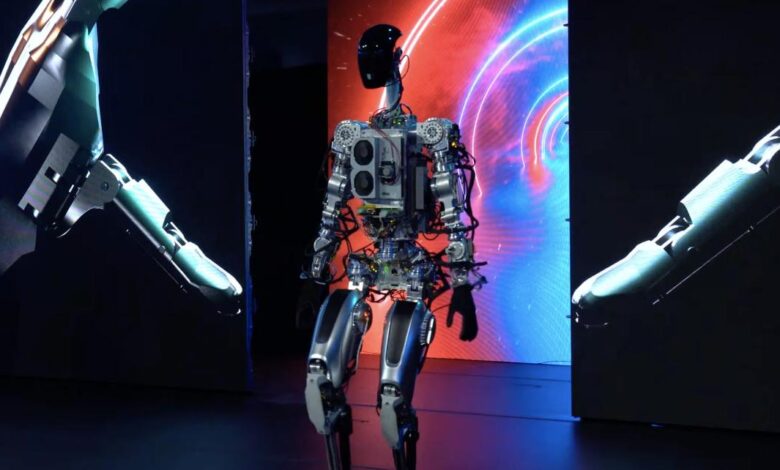
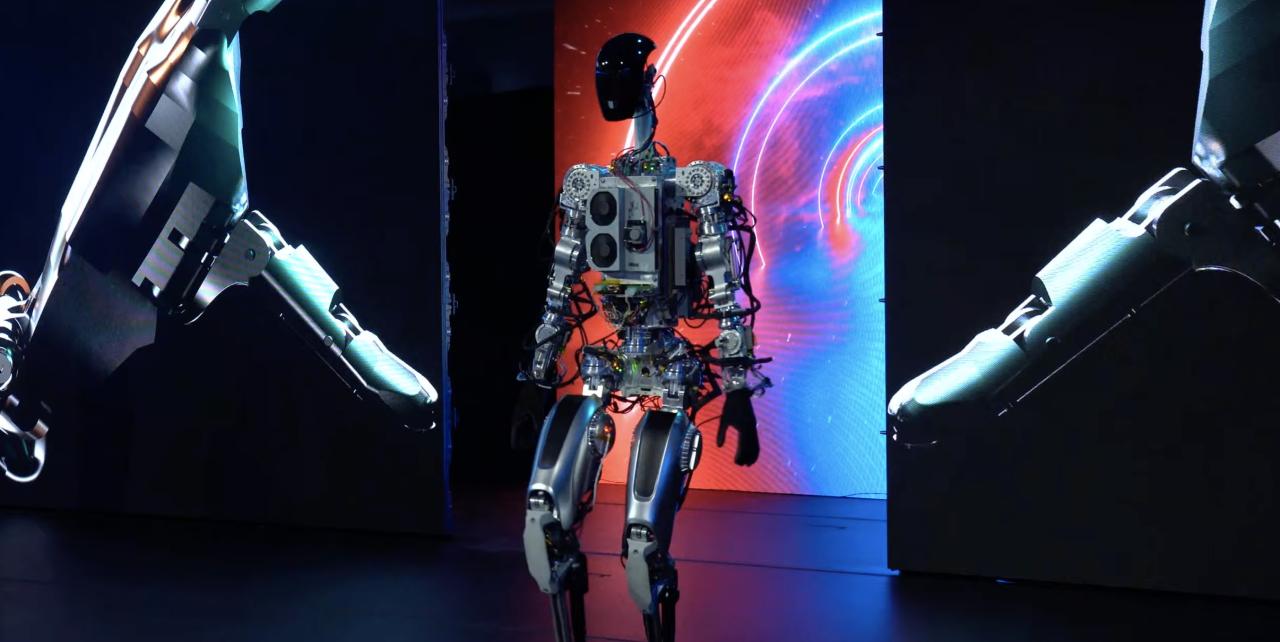
Through public demonstrations and Tesla’s AI Day presentations, a detailed picture of the Optimus prototype’s engineering has emerged. It is a masterpiece of integrated systems designed for performance, efficiency, and safety.
A. The Brain: A Scalable AI Architecture
Optimus is powered by the same Tesla Full Self-Driving (FSD) computer that runs in the company’s vehicles. This system processes data from a suite of cameras, using a vision-based approach to understand its environment.
* Neural Networks: The robot’s “brain” is a complex set of neural networks trained on vast amounts of video and data from Tesla’s fleet of millions of vehicles. This training allows Optimus to identify objects, understand their properties, and predict how they will behave.
* Task Planning and Execution: Beyond perception, the AI handles motion planning. It can break down a high-level command like “pick up the tool and bring it to the workbench” into a sequence of coordinated movements, balancing its body, navigating obstacles, and manipulating the object with precision.
B. The Body: Actuation and Kinematics
The physical design of Optimus is a study in biomimicry and robust engineering.
* The Hands (End-Effectors): One of the most critical and difficult components is the hand. Optimus’s hand is designed with 11 degrees of freedom, allowing it to perform complex, human-like grips. It can apply the right amount of force to handle delicate objects like an egg without breaking them, yet possess enough strength to carry a heavy bag.
* The Legs and Locomotion: Bipedal locomotion is an incredibly difficult engineering problem. Optimus uses a combination of precisely calibrated actuators, sensors, and balance algorithms to walk, squat, and navigate uneven terrain. Its toe-feet design provides a greater range of motion and stability.
* Power and Endurance: The robot is powered by a 2.3 kWh battery pack, housed in its torso, which is estimated to provide a full day of work on a single charge. Its power management system is designed to be highly efficient, drawing minimal power when idle.
C. The Nervous System: Sensing and Safety
To operate safely alongside humans, Optimus is equipped with a multi-layered safety system.
* Perception: Its primary sensors are cameras, but it is also equipped with inertial measurement units (IMUs) and force/torque sensors in its joints. This gives it a sense of proprioception—knowing where its limbs are in space and how much force it is exerting.
* Collision Avoidance: The AI is trained to predict the paths of moving objects (including people) and plan its own path to avoid collisions.
* Hardware Fail-Safes: The system includes a local, independent electrical circuit that can disengage the actuators if a failure is detected, preventing uncontrolled movements.
C. The Evolutionary Roadmap: From Prototype to Global Workforce
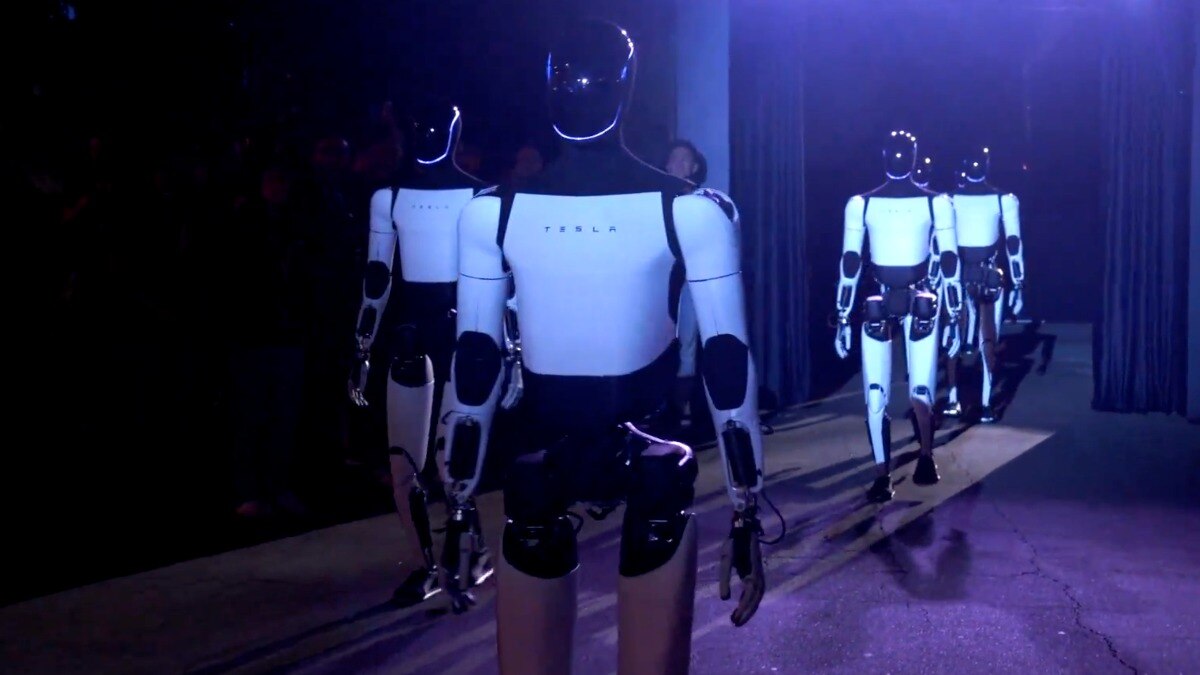
Tesla’s approach to Optimus is iterative and ambitious. The public has seen a journey from a dancer in a suit at Tesla’s first AI Day to a functional, walking, object-manipulating prototype.
A. Prototype Evolution (Bumblebee, Optimus): The first working prototypes, internally nicknamed “Bumblebee,” were rudimentary but proved the core mechanical and electrical systems. The current Optimus prototypes demonstrate vastly improved walking gait, balance, and dexterous task execution.
B. The Path to Mass Production and Affordability: Elon Musk has stated a goal of producing Optimus at a volume of millions of units and a price point “probably less than $20,000.” Achieving this would be a watershed moment, making advanced robotics accessible to small businesses and even individual consumers. This goal relies on Tesla’s gigafactory manufacturing philosophy: extreme vertical integration and automation of the production process itself.
D. The Economic Earthquake: Applications and Implications
The potential applications for a capable, affordable humanoid robot are virtually limitless, promising to unlock trillions of dollars in economic value while simultaneously disrupting the global labor market.
A. Tesla’s First Customer: Gigafactory Automation
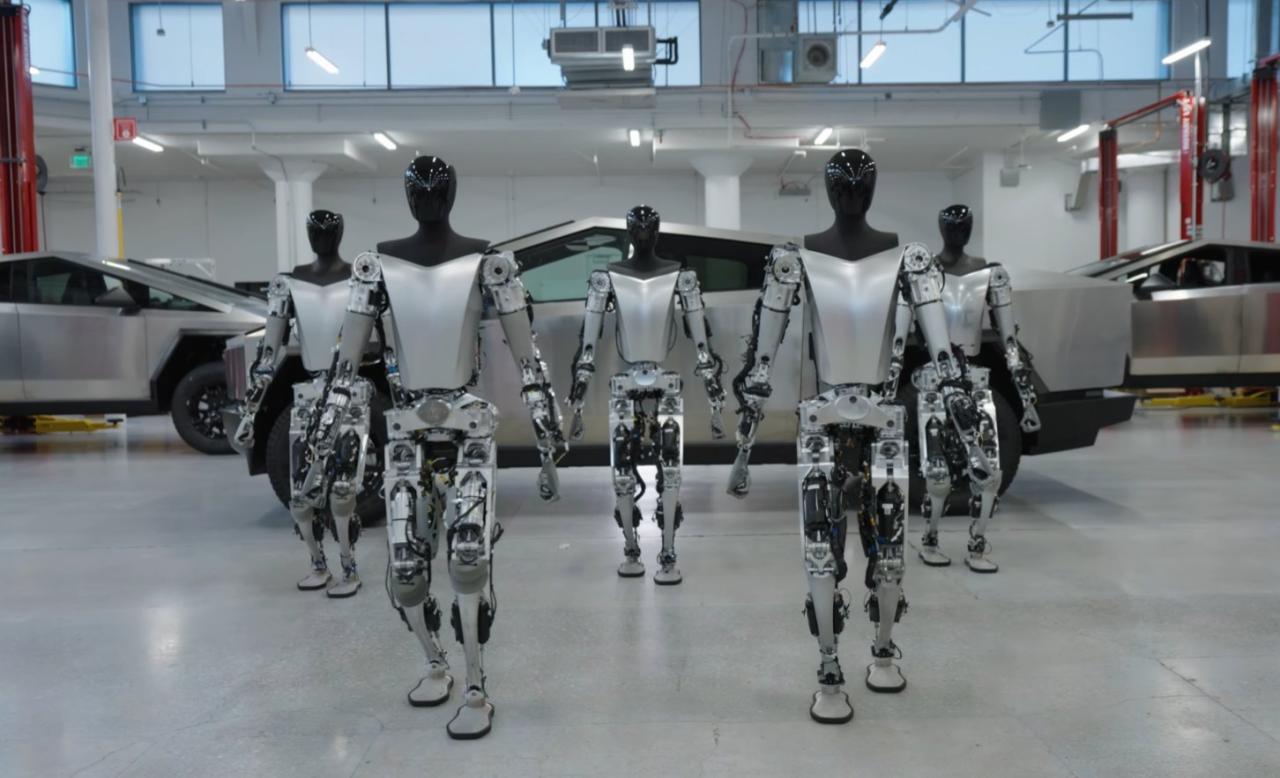
The initial and most obvious application is within Tesla’s own factories. Optimus bots could be deployed for repetitive, simple, or dangerous tasks that are currently difficult to automate with traditional robotics.
* Example Tasks: Loading and unloading machines, simple assembly line operations, logistics (moving parts around the factory), and quality control inspections.
B. Transforming Global Manufacturing and Logistics
Beyond Tesla, every manufacturing and logistics company on Earth would have a use for a general-purpose robot that can work 24/7 without fatigue.
* Warehouses: Picking and packing orders, palletizing goods.
* Construction: Performing simple tasks like laying bricks, drilling, or transporting materials on a construction site.
* Agriculture: Harvesting crops, weeding, and monitoring plant health.
C. The Consumer Revolution: The Personal Robot
At a sub-$20,000 price point, Optimus could become a common household appliance.
* Domestic Chores: Cooking, cleaning, laundry, and yard work.
* Elder Care and Assistance: Providing physical assistance to the elderly and disabled, helping them with daily tasks and providing companionship, thereby alleviating the burden on healthcare systems.
* Security and Home Maintenance: Patrolling a property or performing basic home repairs.
E. Navigating the Storm: The Challenges and Ethical Dilemmas
The path to a world filled with Optimus robots is fraught with immense technical, social, and ethical challenges.
A. The Technical Hurdles:
* Unsupervised Learning and Adaptation: While Optimus can be trained for specific tasks, achieving true general intelligence—the ability to walk into an entirely new environment and figure out what to do without explicit programming—remains a monumental challenge.
* Hardware Reliability: Creating joints, actuators, and hands that are both dexterous and durable enough for millions of cycles without failure is a massive engineering undertaking.
B. The Socio-Economic Disruption:
* Mass Job Displacement: If Optimus succeeds, it could automate tens of millions of jobs in manufacturing, logistics, and services virtually overnight. This poses a threat of widespread technological unemployment and demands a societal conversation about economic models, universal basic income (UBI), and the meaning of work.
* Economic Inequality: The owners of the robotic means of production could see their wealth skyrocket, while displaced workers struggle, potentially leading to extreme social inequality.
C. The Ethical and Safety Imperatives:
* The “Killer Robot” Trope: While Optimus is designed for peaceful purposes, the underlying technology could be weaponized. Strong international regulations will be needed to prevent this.
* Privacy and Autonomy: A robot with constant camera vision in your home raises significant privacy concerns. Furthermore, the degree of autonomy it should have—can it make its own decisions?—is a profound philosophical question.
* The Alignment Problem: As with advanced AI, ensuring that the robot’s goals are perfectly aligned with human values and safety is a critical, unsolved problem.
Conclusion: The Dawning of a New Species?
Tesla’s Optimus is more than a robot; it is a symbol of a threshold we are about to cross. It represents the convergence of AI, energy, and mechanics into a form that mirrors our own. The successful development and deployment of Optimus would mark the beginning of the true robotics age, a period of history as transformative as the industrial or digital revolutions.
The potential benefits are staggering: the elimination of dangerous and demeaning work, a dramatic increase in economic productivity, and the augmentation of human capabilities, especially for the elderly and disabled. However, the risks are equally profound, threatening economic stability and raising existential questions about humanity’s role in a world where machines can do most of what we can do, only better and cheaper.
The story of Optimus is still being written. Its ultimate impact will be determined not just by the engineers at Tesla, but by policymakers, economists, and society as a whole. We have a narrow window of opportunity to guide this technology toward a future that is equitable, safe, and ultimately, human-centric. The age of humanoid robotics is coming. The question is, are we ready for it?