For over a decade, the smartphone experience has been synonymous with the app. The launch of Apple’s App Store in 2008 created a gold rush, birthing multi-trillion-dollar companies and fundamentally reshaping commerce, communication, and entertainment. Our digital lives became organized into a grid of colorful icons, each a gateway to a specific service or function. However, a profound shift is now underway, signaling the beginning of the end for the app-centric model. We are entering a post-app world, a transition driven by the convergence of advanced artificial intelligence, ubiquitous connectivity, and a growing user fatigue with app overload. This evolution is not about the disappearance of software, but its transformation into something more fluid, contextual, and invisible. The future of digital interaction is moving beyond the isolated silo of the app and towards a paradigm of ambient, conversational, and integrated intelligence.
A. The App Fatigue Crisis: Why the Model is Breaking
The very success of the app economy has sown the seeds of its own decline. Users and developers alike are hitting a wall, making the current model increasingly unsustainable.
A.1. The Discovery and Attention Bottleneck
With millions of apps competing for a finite amount of screen space and user attention, the app ecosystem has become a brutally competitive and inefficient marketplace.
-
The Impossible Discovery Problem: For new apps, gaining visibility is nearly impossible without a massive marketing budget. For users, finding a useful new app involves wading through an ocean of low-quality options, reading reviews, and committing to a download before even experiencing the service.
-
Cognitive Overload and Decision Fatigue: The average user has dozens of apps installed but regularly uses only a handful. The constant context-switching between disparate interfaces and the mental effort of deciding which app to open for a given task creates a significant cognitive burden. This “app fatigue” is a real phenomenon, leading to user resentment and a reluctance to add new apps to their digital lives.
A.2. The Friction of the App Experience
The process of using an app is filled with micro-frictions that interrupt the flow of intent and action.
-
The Download-Install-Login Barrier: Before accomplishing any task, a user must find the app, download it (consuming storage), install it, create an account, and often navigate a complex onboarding process. This high-friction barrier discourages spontaneous use and makes simple, one-off tasks needlessly complicated.
-
The Siloed Data Problem: Apps function as walled gardens. Data created in one app is trapped there, unable to seamlessly interact with data in another. Planning a trip might involve switching between an airline app, a hotel app, a maps app, and a notes app, with no easy way to synthesize the information. This fragmentation is antithetical to how humans naturally think and work.
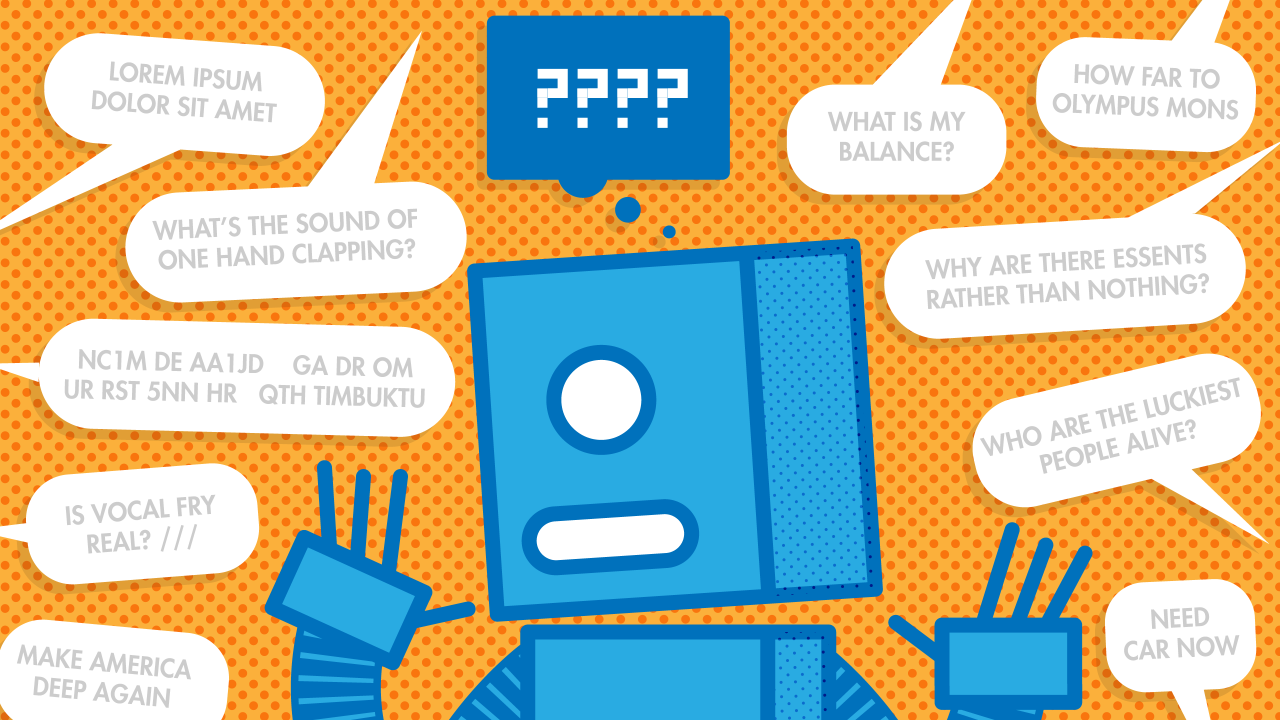
B. The Successors: The Pillars of the Post-App Era
The decline of the standalone app is making way for new, more powerful interaction models that are more aligned with human intuition.
B.1. The Rise of Conversational AI and Chatbots
The most direct challenger to the app is the conversational interface, powered by large language models (LLMs) like GPT-4.
-
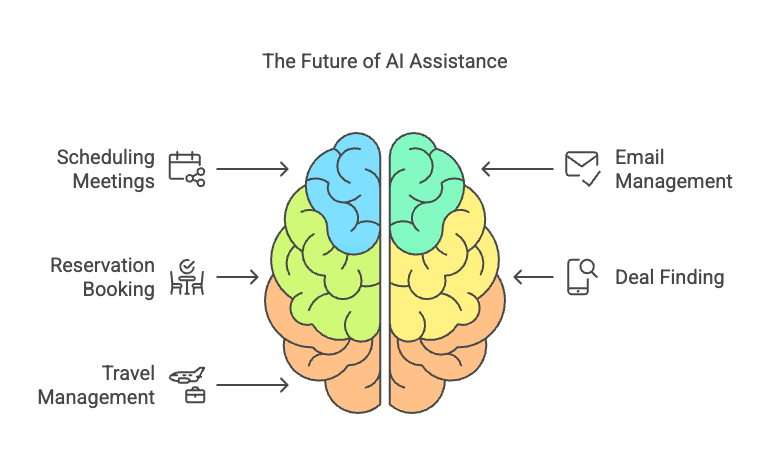
The Zero-Interface Interface: Instead of navigating menus and buttons, users simply state their goal in natural language. The AI acts as an intermediary, capable of performing complex, multi-step tasks across multiple domains without the user ever opening a dedicated app. You can ask an AI to “find the best flight to Tokyo next month, compare it with prices from last year, and summarize the top three tourist attractions from recent reviews,” and it will execute this as a single, fluid command.
-
The Consolidation of Functionality: A single, powerful AI assistant can replace the need for dozens of single-purpose apps for tasks like trip planning, recipe finding, email composition, and complex calculations. It becomes a universal tool, reducing the need to constantly jump between specialized applications.
B.2. Super Apps and Integrated Ecosystems
While a Western phenomenon, the “Super App” model popularized in Asia by WeChat and Alipay offers a glimpse of one potential future—consolidation rather than fragmentation.
-
The “Everything App” Concept: A super app is a single application that bundles a wide array of services—messaging, social media, payments, food delivery, ride-hailing, government services—into one integrated platform. Users never need to leave the app to accomplish daily tasks.
-
Mini-Programs and Lightweight Experiences: Within these super apps, lightweight “mini-programs” offer app-like functionality without requiring a separate download or installation. They load instantly, use the super app’s universal login and payment system, and disappear when not in use, offering a frictionless experience that standalone apps cannot match.
B.3. Ambient Computing and The Invisible Interface
The ultimate endgame of the post-app world is the complete disappearance of the explicit “interface.” Computing becomes ambient, woven into the fabric of our environment.
-
Context-Aware Intelligence: Your devices—phone, watch, car, smart glasses—will work together to anticipate your needs and provide information without being asked. Your car might automatically navigate to your next calendar appointment, while your glasses display a reminder to pick up milk as you pass the grocery store, all powered by background intelligence.
-
The Dominance of Voice and Wearables: As smart glasses, hearables (advanced earbuds), and other wearables mature, the primary mode of interaction will shift from a touchscreen to voice, gesture, and glance. These devices are not designed for a grid of apps; they are designed for instantaneous, contextual information delivery and action.

C. The Technological Enablers: Making the Post-App World Possible
This paradigm shift is being powered by several key technological advancements working in concert.
C.1. The AI and Large Language Model Foundation
Generative AI is the indispensable engine of this transition.
-
Natural Language Understanding: The ability of LLMs to parse complex, ambiguous human requests is what makes conversational interfaces viable. They can understand intent, ask clarifying questions, and synthesize information from multiple sources in real-time.
-
The Action Model and API Integration: The next evolution of AI involves “action models” that can not just provide information but also execute tasks. By granting AIs secure, permission-based access to APIs (Application Programming Interfaces), they can act on your behalf—booking a flight, sending an email, or ordering groceries—effectively becoming a single, unified interface to all digital services.
C.2. 5G/6G and Edge Computing
The seamless, instantaneous experience of the post-app world requires a powerful and responsive connectivity layer.
-
Ultra-Low Latency: Next-generation networks eliminate the delay in data transmission, making real-time AI interactions and cloud processing feel instantaneous. This is critical for conversational AI and ambient computing, where any lag destroys the illusion of a fluid, intelligent assistant.
-
Edge Processing: By processing data closer to the user (on the device or at a local network edge), responses become faster and more private. This allows for complex AI tasks to be performed without a constant, bandwidth-heavy connection to a central cloud, enabling more robust and reliable ambient experiences.
C.3. The Platform Shift: Operating Systems as AI Orchestrators
The role of the mobile operating system (iOS and Android) is evolving from an app launcher to an AI orchestration layer.
-
Deep OS Integration: AI will become a core, embedded feature of the operating system, not just another app. It will have system-level access to your calendar, location, contacts, and preferences, allowing it to act as a true personal assistant with a holistic understanding of your context.
-
The App as a Backend Service: In this new model, the traditional app doesn’t disappear; it evolves. It becomes a “backend service” or an “AI skill” that the OS-level intelligence calls upon when needed. The user interacts with the AI, and the AI, in turn, interacts with the app’s functionality in the background, invisible to the user.
D. The Implications and Challenges of an App-Less Future
This transition will have far-reaching consequences for businesses, developers, and society as a whole.
D.1. The Shifting Business and Development Landscape
The economics of software will be radically transformed.
-
The Death of the App-Based Business Model: Companies that rely on app downloads, in-app purchases, and mobile advertising will need to pivot. The new battle will be over “AI mindshare”—ensuring your service is the one the default AI assistant recommends and uses to fulfill user requests.
-
The Rise of the API Economy: Value will shift from the user interface to the underlying service and its API. The most successful companies will be those that offer the most reliable, comprehensive, and AI-accessible APIs, as they become the building blocks for AI agents to construct user experiences.
D.2. The Privacy and Centralization Dilemma
A world run by a few powerful AIs presents significant risks.
-
The Gatekeeper Problem: If interaction is funneled through a handful of dominant AI platforms (e.g., from Google, Apple, or OpenAI), those companies gain immense power as gatekeepers. They can decide which services are promoted, which are demoted, and ultimately, shape user choice in unprecedented ways.
-
The Ultimate Data Consolidation: An AI that knows everything about you—your schedule, your purchases, your conversations, your location—represents the ultimate privacy challenge. Ensuring that this data is not abused will be one of the defining regulatory battles of the coming decade.
Conclusion: From Icons to Intelligence
The age of the app, while revolutionary in its time, was ultimately a transitional phase. It digitized our world but trapped our experiences in isolated containers. The post-app world promises to break these containers, offering a future where technology adapts to us, rather than us adapting to it. It is a shift from manual, intent-based interaction (opening an app) to proactive, ambient assistance. The icon grid will fade into the background, replaced by an intelligent, conversational layer that understands our goals and orchestrates the digital world on our behalf. The end of apps is not the end of software; it is the beginning of a more human, more intuitive, and truly intelligent digital existence.
Tags: post-app world, future of mobile, conversational AI, ambient computing, AI assistants, app fatigue, super apps, software evolution, mobile technology, user experience design